By Nahla Nainar/Features Editor
For a snapshot of the fixtures used in the average Doha apartment complex, you need go no further than the parking lots and pavements of some buildings in the Mansoura area.
Bathroom fittings, tube lights, bits of carpeting, old mattresses, wooden screens and even office chairs can be seen gathering dust (and who knows what else) outside many of the residential tower blocks here.
Diminished in presence between new buildings that proudly advertise their ‘F-F’ (fully furnished) or ‘S-F’ (semi-furnished) status in the classified advertisements, these structures, which once formed a proud part of the older ‘new’ Doha, are now pictures of neglect, and despite their rents (on average between QR5,000-7,500), resemble the much-derided labour camps that the Gulf is infamous for. Most have not seen a fresh lick of paint in at least five years.
The detritus is testament to the nomadic nature of the Gulf expatriate’s life. But unlike the Bedouin camps of yore, today’s expats move across nations, taking what they can, and dumping the rest.
It is not unusual to find therefore, that the automobile, one of the first symbols of an expatriate having ‘arrived’ in the Gulf, is often the most commonly abandoned object of desire.
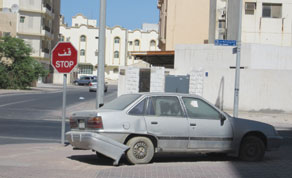
In Mansoura, a badly banged up vehicle’s owner has sought -- and found -- refuge for the car on the pavement of a busy intersection. And there it has stood for several months, a dumb witness to the reckless driving habits of the city.
Across the road, a car has been occupying premium parking space in an apartment block, its tyres airless for almost a decade, each coating of dust increasing its appearance of a piece of street art not unworthy of the Turner Prize.The World Toilet Organisation estimates that 2.6bn or 40% of mankind does not have access to proper sanitation and toilets. And yet, the problem could be at least partially solved by visiting Mansoura, going by the number of water closets, bidets and even bath-tubs strewn across some parking lots here.
Elsewhere, someone has used the niche between apartment windows as a storage area for a toolbox and bundles of electric wiring. A shopping trolley has been wheeled from one of the nearby hypermarkets and filled with rubbish.
Who ultimately is responsible for clearing up these areas? Tenants who have pointed out the problem to building owners have been asked to ‘be grateful’ that the rents have not been increased. Not that the maintenance services usually considered mandatory before have now become non-existent.