


 |
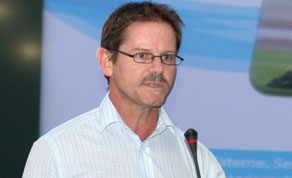
| Pitre Bourdo |
Speaking on the sidelines of the event, Pitre Bourdon, Aspire Head of Research said: “Our ongoing (research projects) are looking at the effects of growth and maturation of our young boys as they go from 12 year-olds, when they come into the academy, through to 18 when they exit -- so we’re looking at change and how those changes impact on performance, be it in football or in athletics, all the sports that we deal with. We have a strong focus on the maturation component of research, and within that we also have some expertise in areas of heart rate variability and how that can impact, and look at recovery and fitness change.”
“We’re also doing some research in high intensity efforts within game play -- that is repeated sprints and the ability to keep sprinting and backing up, and we’re doing lots of research currently in football, particularly with young boys and how they can recover. We’re doing some research in terms of altitude, collaboratively with people from Australia and Germany,” said Bourdon.
One recent project examined the possibility of a critical development window, where training could possibly take advantage of natural growth spurts. Other projects studied the mechanics of sprinting for professional footballers, and methods of monitoring muscle flexibility for youths.
Bourdon explained: “We’re going to see improvements in our boys at Aspire because they grow, and as they grow they get bigger and stronger naturally, but as you see in the data, we can, through statistical analysis, remove height and mass … and what we are seeing is the impact that we’re having here at Aspire is actually showing improvements over and above growth. So what we’re getting is some very good feedback that the programmes we’re implementing are showing physical improvements with our boys in areas of strength, speed and power.”
One study reviewed the mechanics of the ideal throw-in technique and implemented those lessons in training, with a 19% improvement in the test subject. Bourdon said: “We are now trying to implement that into a bigger athlete cohort, we’re doing it with boys that will be perhaps designated throwers.”
“We’re also doing some other work specifically with goalkeepers, looking at their throwing and kicking abilities. We have visiting teams come to Aspire from Europe and other countries to compete against our boys and we’re screening their goalkeepers as well as ours to see how our boys match up. We’re also starting to look at specific kicking technique analysis as well, in terms of accuracy and power of kicks, so we’re really starting to break down the major components of the game and research and see how we can improve and develop those with our boys.”
With the possibility that the 2022 World Cup could be played in the summer, the staff at the academy are already in gear. “We’re well aware of the heat and do related work, making sure that their hydration status is kept well and their electrolyte balance is kept well, and also their ability to tolerate and adapt to changes in heat. Last year we collaborated with Aspetar, where we brought people from Denmark, where its obviously a cold environment, to Aspire where they instantly were exposed to high temperatures, and we looked at the acute effects of heat exposure and how that impacts on them. Our boys are lucky in that we have the heat exposure, although they probably find it more difficult when they travel and have to compete in the cold.”