


 |
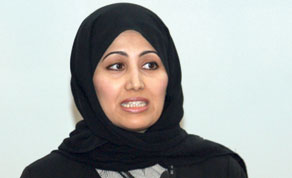
| Dr al-Muslamani |
The Shafallah Medical Genetics Centre has embarked on a study of the prevalence of Autism Spectrum Disorder (ASD) among children in Qatar.
Autism is a brain disorder that is associated with a wide range of developmental problems, especially in communication and social interaction.
It is estimated that one in every 110 children is diagnosed with autism, making it more common than childhood cancer, juvenile diabetes and paediatric acquired immune deficiency syndrome combined.
“We have commenced efforts to do a major study on the prevalence of autism among our children within the age range of five to eight and already we have some preliminary data based on those children being diagnosed at our laboratory,” SMGC senior Research Scientist Dr Fouad al-Shaban said yesterday.
He was speaking during a presentation titled: ‘Prevalence of Autism in Qatar’ at the two-day Autism Workshop organised by the centre to discuss the disorder and ways of curbing it thus reducing the burden on the health system.
“Based on the preliminary study at the SMGC, we found that autism is most prevalent among children aged between seven and 10 as well as among 11-14 years-old at 30.7% each from the total of 179 children sampled,” Dr al-Shaban explained.
He added that the male/female ratio was one to five, an indication that the disorder occurs mostly among male children than in females.
“These figures cannot be generalised though as we are still in the process of collecting more data from various centres involved with the autism treatment such as the Rumailah Hospital and Doha International Centre for Special Needs as well as some private physicians,” he said.
The study, which will be conducted in three phases and over a period of two-three years, will identify, preview and record all children found with the disorder in both public and private hospitals, he mentioned.
“For the study, we are going to randomly select samples from a number of primary schools, seek consent of parents or guardians before we screen the children for ASD using social communication questionnaires and all suspected cases will be scheduled for clinical assessment,” Dr al-Shaban explained.
Another speaker at the workshop, Saudi-based Faisal Autism House (Dari) expert Dr Ahood al-Muslamani cautioned that the Gulf region might face a serious budgetary health problems as in the US if a standard unified Gulf registry for the disorder was not put in place.
“It is very pertinent to have a standardised data collection in a collaborative effort within the Gulf in order to optimise the cost of treating autism,” she said while proposing the initiation of a Gulf Autism Registry Project (GARP) to also optimise resources for autism care.
Other speakers in the morning session of the workshop included Dr Eric Fombonne, who spoke on ‘Epidemiology of ASD: relevance, substantive results and methodological challenges’ and Dr Marwan al-Sharbati on findings of a study ‘Autism Spectrum Disorder in Oman’ during the conference.
The workshop, which concludes today, was conducted in four sessions focusing on epidemiology of autism, diagnosis of autism, genetics of autism and treatment of autism.