The Supreme Council of Health’s Public Health Department has organised a workshop for trainers on the importance of diphtheria and tetanus vaccinations.

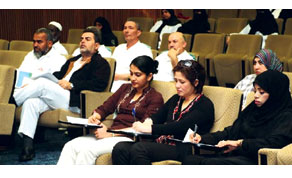
A section of the audience
About 100 participants comprising nurses from public, independent and private schools took part in the event conducted in collaboration with the Primary Healthcare Department and the Supreme Education Council.
At the workshop, Health Protection and Disease Control director Dr Mohamed al-Hajri explained the importance of booster doses of the vaccines, especially for the first-grade students.
He said that the main objective of the workshop was to exchange experiences and update information and to encourage school students and parents to pay attention to vaccinating their children against diphtheria and tetanus.
He stressed the importance of receiving the vaccines by adults every 10 years.
Dr Al-Hajri added that the workshop was part of the activities undertaken by the management as part of a series of training courses on a regular basis, which are aimed at improving the performance and the involvement of those who go to the target groups.
SCH’s public health specialist Dr Hossam Rizk, who gave a presentation on diphtheria, talked about the need to receive vaccinations in order to guarantee adequate protection against the disease in the country. Resident physician in community medicine Dr Mary Maslamani shed light on tetanus as a disease and why tetanus booster vaccinations should be taken to ensure that the decrease in incidence of the disease.
Primary Healthcare Nursing director Laila al-Jasmi explained the role of nurses in schools to educate students and their parents about the importance of vaccination.
EPI head Dr Asma al-Nuaimi also pointed to the need to educate students and parents on the importance of vaccination in order to achieve the desired goal of increasing the immunisation coverage for diphtheria and tetanus.
The SCH and the SEC and Primary Healthcare will start a vaccination campaign for high school students in the coming months as is the case annually, to ensure the safety of students and reduce the risk of the disease, she mentioned.