By Ramesh Mathew
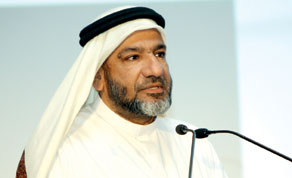
The country has spent huge amounts on the construction of major power and water desalination plants in the last six years, executive managing director of Qatar Power Company (QPower) AbdulSattar al-Rashid said at a gathering yesterday.

Abdulsattar al-Rashid
“The infrastructure development in power and water sectors in Qatar over the last 5-6 years has few parallels elsewhere in the region,” said al-Rashid at a conference on Qatar projects at Grand Hayat Hotel yesterday.
In fact Qatar Electricity and Water Company (QEWC) was the first public limited company to produce electricity and desalinated water in the region, way back in 1976, he said.
While Ras Laffan A, with an installed capacity of 756MW and 40 MIGD of water was completed in 2004-05 at a cost of $450mn, more than $900mn was spent on the construction of Ras Laffan B, which has a capacity of 1025MW and 60 million gallons of water a day (MIGD), he said.
The 2000MW Mesaieed Power was set up in 2009 at a cost of $2.3bn and the Ras Girtas power and water plant, being made in the north of Ras Laffan will cost the exchequer about $3.9bn when fully operational next April, said al-Rashid.
While explaining the current requirements of the country, he said the maximum peak load requirement of 2010 was in the extreme summer of July when it touched 5090MW against the usual requirements of 4535MW.
The official said current production is in the region of 7589MW, which is way above the actual requirements of 6200MW.
Al-Rashid also said the country’s first independent water and power plant at Ras Abu Fontas was made in 1976 with a capacity of just about 497MW. Several expansions were made later and the combined units have an installed capacity close to 2533MW. Similarly, expansions made over the years at the plant make it capable of generating 164 MIGD of water.
Recalling the initiatives for privatisation made by Deputy Prime Minister and Chairman of Emiri Diwan HE Abdullah bin Hamad al-Attiyah when he was the minister of energy and industry, al-Rashid said the privatisation helped the country attract foreign investment and there has been a major surge in the two sectors over the last one decade.
Speaking earlier, manager at Mott MacDonald, Peter Looker said the substations built at West Bay have turned out to be role models for the whole of the region.
Each of the nine substations built in the West Bay area is an architectural marvel, he said, adding all the nine set a model for completing projects way ahead of the schedule. It was possible only because of the excellent business environment in the country and remarkable levels of co-operation between Kahramaa officials, contractors, suppliers and engineers who executed the projects, he said.
The contracts for the substations were awarded in October 2005 and the first was opened less than two years later. “It was a remarkable achievement that the last one was completed in April 2008.” Looker also attributed the timely completion of the sub-station projects to the good cash flow from the government.
The consultant also hoped the awarding of World Cup football to Qatar in 2022 will accelerate the rate of development in water and power sectors in the coming years.