By Ramesh Mathew
Veteran Indian educational counsellor and career guidance expert B S Warrier has advised expatriate parents not to impose their will and likes on children on issues pertaining to educational career.

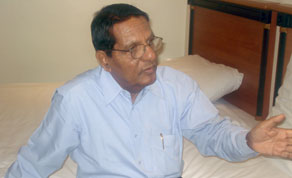
Educational counsellor and career guidance expert B S Warrier
Warrier, who is in Doha on an invitation from Mar Thoma College (Tiruvalla) alumni Association -Qatar chapter, held a two-day career guidance workshop for children of expatriate parents. More than 100 students participated in the workshop.
Speaking to Gulf Times, Warrier felt one of the main hurdles faced by the expatriate children while choosing their career after schooling in the Gulf was the absence of information on further educational options. “Along with that a considerably large number of parents have absolutely no clue on the level of competition that one faces these days on the educational front.”
Many of them have a tendency to overestimate the capacities of their wards, he said.
The 74-year-old career guidance adviser has also noticed that a number of expatriate parents who had failed to achieve certain landmarks in their career are found putting unnecessary pressure on their wards at a certain juncture of the latter’s school career. “Maybe, it is out of their pride and compulsions that they are doing so. However, such parents would do well if they realise there have been numerous examples of such attempts backfiring on both the parents and children,” he warned.
Queried about the increasing trend among expatriate parents to restrict their children’s higher studies to either medicine or engineering, Warrier said it was one of the main drawbacks of today’s educational system. “This is mainly because of the lack of awareness among the parents and children about the other available educational options that suit the requirements of the students.”
The expert feels that there is certainly a lack of information among students and parents. “Let the students be encouraged to undertake high quality professional entrance tests after proper preparation and let them have a clear picture of the competitions that they face at that level,” he said.
However, it is a pity that a number of parents are content with paying huge capitation fees at ill-equipped educational institutions for their children’s studies in what seem to be a bid to “fulfil their dreams rather than against the wishes of children,” Warrier said. Let the child take a course that would suit his interests and of course his future requirements, he added.
While choosing a higher educational career anywhere, there are many things that one needs to take care of. “One need not choose an institution just because a particular course is available there,” he adds.
“Such issues as proximity of the institution, quality of courses, people who operate the institute, security of children on the campus, discipline, fees affordability, hidden fee if any, the campus’ infrastructure and finally the future prospects of the educational programme that one undertakes for studies need to be considered by the student rather than by parents,” he explained. It would also do a world of good to students, if he manages to get a feedback about the positions in life attained by students who passed out from an institution in the immediate previous years, he added.
In short, a student should have an understanding of the market value of an educational programme before he decides to undertake studies, insists Warrier.
Warrier also discourages Gulf parents’ attitude of selecting private colleges on the basis of the fee they charge for a programme. “One needs to have a clear understanding of the number of seats available for a programme in a particular state to get a clear understanding of the fee structure.”
For instance, Kerala, which had only less than 1,000 seats for entire engineering programmes more than two decades ago, has close to 29,600 seats in as many as 109 colleges that come under the purview of the State entrance commissioner. Other than these there are 10 colleges run by Catholic church, each of which have between 500 and 600 seats annually. Not over, the state also has a National Institute of Technology (NIT, formerly Regional Engineering College) and a deemed engineering institute run by Amritanandamayi. These colleges do not come under the entrance commissioner.
Warrier also has noticed that most children and parents are unaware that there are 28 NITs across India these days. “Since there are more seats at NIT unlike what it used to be, the situation offers better chances for those wards taking its entrance examination”. Students also need a thorough understanding of attractive career options in the Indian civil service, he said.
Acknowledging that the situation today very much suited the requirements of students prepared to undertake challenges, Warrier called for better awareness on the part of parents and students alike on career options.