


 |
|
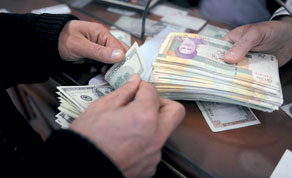
A currency trader prepares to exchange Iranian rial notes (right) for US dollar notes at a currency exchange in Tehran. Websites such as Mesghal.com and Mazanex.com yesterday had rates blanked out for the rial’s value against many other nations’ currencies, including the dollar, the euro, the pound and the yen, among others
|
Currency rates online for Iran’s pummelled rial were blacked out yesterday, while transactions on the open market remained virtually paralysed a week after the money’s collapse.
Sites such as Mesghal.com and Mazanex.com had rates blanked out for the rial’s value against many other nations’ currencies, including the dollar, the euro, the pound and the yen, among others.
The market rate for gold coins was also missing.
In Tehran’s money changing district, licensed bureaux were doing no business at the rate of 28,500 rials to the dollar imposed since Saturday by the central bank in an effort to reverse a collapse of the money last week. Employees said they had no foreign currency to sell.
Instead, a few black market dealers were offering the dollar around 34,000 rials—an increase of 6% over the previous day, and close to the rial’s all-time low of more than 36,000 to the dollar reached last week when it lost 40% in value.
Iran’s currency market has effectively been frozen since October 3, when protests erupted in central Tehran over the sliding rial.
Although shopkeepers and exchange bureaux have since reopened, they are doing little trade.
Merchants in the city’s historic Grand Bazaar, which packs political weight in Iran, have greatly increased prices, to the dismay of shoppers. Several were refusing to sell goods until the currency situation stabilises.
Iran has been facing a growing penury of foreign cash over recent months, preventing the central bank from being able to support the rial on the open market, where it has lost more than two-thirds of its value since the beginning of this year.
The penury was provoked by increasingly harsh oil and banking sanctions imposed by the West over Tehran’s nuclear programme. The measures have hindered Iran’s ability to repatriate much of the foreign revenues generated by its oil exports.
The rial’s crash has sparked a row among Iran’s leadership, with MPs and politicians blaming the crisis on President Mahmoud Ahmadinejad’s management. Ahmadinejad has pointed the finger at the sanctions and at the other branches of government.
The government and the parliament have met several times in the past few days to look at ways to handle the crisis, but no details about the measures to be taken have been given.
The head of Iran’s parliamentary budget commission, Gholamreza Mesbahi Moghaddam, affirmed yesterday that the open market was operating normally, but that money changers were not allowed to charge a commission of more than 1%.
He also said that some 50 black market money changers—dubbed “disruptors”—have been arrested since last week’s protests.
The official dollar rate in Iran has been fixed for several months at 12,260 rials, but that is reserved for government agencies and a few companies importing food or other goods judged essential.
Apart from travellers and families sending money to relatives abroad, more and more Iranians are looking to convert their savings into foreign currency to protect them against runaway inflation that is officially put at nearly 25% but is really much higher.
In an effort to get around the banking sanctions and the pressure on the open market, the government in late September created an “exchange centre” that puts importers in contact with exporters, to exchange funds using a rate calculated at a small discount to the open market rate.
Some $700mn have changed hands in that centre in the past three weeks, according to the Fars news agency, but so far there is no sign of the pressure lifting off Iran’s money.