


Reuters/London
Oil consumers have enough crude supply and the risk to global demand growth remains skewed to the downside, exporter group Opec said yesterday, in a report that builds a case against any use of strategic reserves by consumer nations to lower prices.

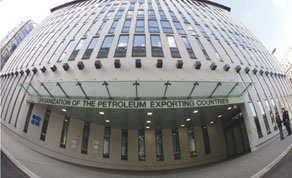
The Opec headquarters in Vienna. The group said yesterday that consumers have enough crude supplies
The Organisation of the Petroleum Exporting Countries said its production rose by about 260,000 barrels per day (bpd) in August, despite a European Union embargo on Iran’s exports, due to higher output from other members of the 12-member group.
Opec’s report comes as the US and other consumer nations are worried about high oil prices, which have risen to $115 a barrel for Brent crude. Leaders of the Group of Eight major economies have signalled their readiness to tap into emergency oil stockpiles if needed.
But Opec said it saw enough crude oil in the market, a day after similar remarks by its top producer Saudi Arabia which were seen by some in the market as a signal to consumers there was no need for a release of emergency reserves.
“OECD crude oil stocks remain at comfortable levels, especially in the US market,” Opec said in the report. “As a result, any product shortage could be readily met by higher utilisation of idle refinery capacity in a market with abundant crude supplies.”
Analyst Sam Ciszuk of UK-based consultant KBC Energy Economics said the report signalled Opec’s dislike of any use of emergency stocks, such as the US Strategic Petroleum Reserve (SPR), and agreed with Opec that supply was ample.
“Opec itself is never really happy with SPR releases,” Ciszuk said. “Our view is also that supply is sufficient for the moment. When you look at the stocks situation, it is not problematic.”
Opec’s report is the first of this month’s trio of major oil outlooks to emerge. The US government’s Energy Information Administration issues its report later on Tuesday, followed by the International Energy Agency today.
The rebound in Opec output last month was driven mainly by extra barrels from Angola and Nigeria - and the lack of a further sizeable decline in Iranian supply.
Citing secondary sources, Opec said its production rose to 31.41mn bpd in August from 31.15mn bpd in July. Iranian supply last month was 2.77mn bpd, versus 2.78mn bpd in July.
Iranian output has fallen sharply this year because of European and US sanctions over its disputed nuclear programme. The EU embargo bars EU insurance firms from covering Iran’s exports, which has hindered imports by non-EU buyers.
The Opec report adds to earlier signs of the drop in Iranian shipments bottoming out as some non-EU buyers find ways around the insurance ban. In Japan, government-backed shipping cover has encouraged purchases, say industry sources.
Output also declined in Opec’s top producer, Saudi Arabia, which told Opec it had trimmed supply by 50,000bpd to 9.75mn bpd in August. An August 30 Reuters survey also said Saudi supply dropped by that amount.
Opec now expects demand for its crude to average 29.55mn bpd in 2013 — unchanged from last month and significantly less than it is pumping at present.
Also in the report, Opec left its forecast for the growth in world oil demand next year unchanged at 810,000bpd and repeated the view from last month’s report that oil use could undershoot the estimate by 20%.
“The economic picture is vague and there are plenty of potential uncertainties going forward,” Opec said. “Downside risks exist as the spillover from the slowing global economy could reach some regions of the non-OECD.”