


 |
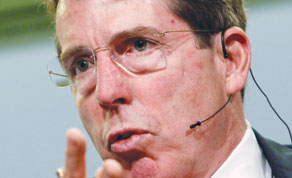
| Diamond: ‘The external pressure placed on Barclays has reached a level that risks damaging the franchise ...’ |
Barclays chief executive Bob Diamond resigned yesterday, the second head to roll in two days in a dramatic twist to a deepening scandal over the rigging of a key global interest rate.
The scandal is dragging the City of London financial sector into disrepute after various problems revealed by the financial crises, could threaten other top banks, and has riled the government and politicians.
Diamond, high-profile and highly paid, caved in to heavy political pressure even though it was thought that he might hang on to his job after Barclays chairman Marcus Agius took the first wave of outrage by resigning on Monday.
Some analysts said that this was intended to shield Diamond, seen by some as a genius with the golden touch, by others as an overpaid and overbearing banker.
Agius is now expected to leave only after leading the search for a new chief executive to replace Diamond, who has quit after 18 months in the top post.
Barclays refused to comment on reports that chief operating officer Jerry del Missier was also set to resign.
The scandal, which may implicate other international banks and trigger criminal prosecutions, concerns manipulation of the Libor and Euribor inter-bank lending rates.
These benchmark rates play a key role in global markets, affecting what banks, businesses and individuals pay to borrow money and serving as a benchmark for contracts. Libor is a flagship London instrument used throughout the world and Euribor is the eurozone equivalent.
“Barclays today announces the resignation of Bob Diamond as chief executive and a director of Barclays with immediate effect,” the bank said in a statement to the London Stock Exchange.
US national Diamond added in the statement: “The external pressure placed on Barclays has reached a level that risks damaging the franchise — I cannot let that happen.”
British Finance Minister George Osborne welcomed Diamond’s resignation.
“I think it’s the right decision for Barclays. I think it’s the right decision for the country. I hope it’s a first step towards a new culture of responsibility in British banking,” he told BBC radio.
Diamond IS still due to face questions from British lawmakers today over the affair.
Barclays’ share price jumped 3.0% to stand at 173.50 pence in midday trading on London’s benchmark FTSE 100 index, which rose 0.35% overall.
“Despite the void Mr Diamond’s departure leaves at one of the UK’s largest banks, investors seem to be thinking — or at least hoping — that this may draw a line under the issue,” said Mike McCudden, head of derivatives at trading consultancy Interactive Investor.
Diamond’s resignation comes as the bank faced possible criminal prosecution.
Britain’s Serious Fraud Office on Monday announced that it was considering whether it was “appropriate and possible to bring criminal prosecutions” over the issue, adding that it hoped to reach a conclusion within a month.
British Prime Minister David Cameron has also announced a parliamentary inquiry into the revelations that Barclays traders had lied about the interest rates other banks were charging it for loans.
On Sunday, it emerged that bailed-out Royal Bank of Scotland had sacked four traders over their alleged involvement in the affair, raising suspicions that the practice was widespread.
Barclays was last week fined a total of £290mn ($455mn) by British and US regulators for attempted rigging.
Barclays is the first major financial institution to settle following investigations on both sides of the Atlantic.
Markets were also wondering whether the latest banking scandal would result in a radical shake-up of the way in which business is conducted across the City of London financial district amid intense political pressure.