


Reuters/Abu Dhabi
One million barrels of Gulf oil was expected to flow through a new pipeline crossing the UAE to the Gulf of Oman yesterday as the UAE moves to complete the Strait of Hormuz bypass next month.

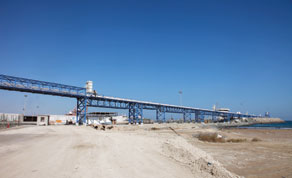
Pipes used to move oil from tankers are seen at Fujairah port on January 27. The 370-km Abu Dhabi Crude Oil Pipeline carries oil from fields in the UAE’s western desert to the east coast port of Fujairah, a major oil storage and fuel bunkering hub
The pipeline ends the Opec producer’s total dependence on the vital Gulf shipping artery which Iran has threatened to block as Western sanctions on its oil exports have tightened.
Escalating tensions in the Gulf region over the last year have spurred the UAE to speed up work on the long-delayed pipeline while other Gulf Opec producers will continue to rely on shipping through the Strait to export fuel.
“This is a great solution for the UAE but it’s not a 100% solution for the whole problem,” said Theodore Karasik, research director at Dubai-based security consultancy INEGMA Group.
The new pipeline has a stated capacity of around 1.5mn bpd, while UAE exports total around 2.4mn bpd. Some sources say the pipeline could carry around 2mn bpd of the UAE’s biggest export at a push.
The 370-km (231-mile) Abu Dhabi Crude Oil Pipeline carries oil from fields in the UAE’s western desert to the east coast port of Fujairah, a major oil storage and fuel bunkering hub.
“Today oil has been received at the main oil terminal in Fujairah and 1mn barrels is coming in,” a source directly involved in the project said. “The plan is to load the first oil tanker around July 1... We will slowly increase it to 1.5mn bpd.”
A source at the Abu Dhabi National Oil Company (Adnoc) said the first oil pumped over the desert to the terminal outside the Strait is likely to be loaded in the first week of July but that the first test cargo would not be exported.
A European Union ban on Iranian crude imports is due to come into effect on July 1. Iranian threats over Hormuz shipping have intensified since December as EU lawmakers have prepared for the ban.
Flows through the Strait last year accounted for about 35% of all seaborne traded oil, or almost 20% of oil traded worldwide.
Almost 17mn barrels of oil were shipped between the northern tip of Oman and the southern coast of Iran in 2011, according to the US Energy Information Administration.
China Iran oil imports recover, recoup earlier fall
China’s crude imports from Iran recovered in May to offset a first-quarter plunge in shipments to nearly half the annual average, after the two nations resolved a wrangle over the terms of annual oil sale contracts.
Yet imports in the first five months fell a quarter from a year ago, with US Secretary of State Hillary Clinton saying China was slowly but surely taking action to cut reliance on Iranian crude. Total shipments for the year are expected to stay low as the country’s top buyer rejected Tehran’s offer of discounted oil.
The US and Europe have imposed heavy sanctions to force Iran to stop its controversial nuclear programme they believe is designed to develop atomic weapons. The West wants Iran’s top oil consumers to cut imports to stem the flow of petrodollars.
Tehran’s top customers, China, Japan, South Korea and India, have all cut imports this year as sanctions make it impossible to finance the deals, find tankers and arrange insurance cover to ship the crude. All three, expect China, have earned a waiver from being cut off from the US’ financial system for reducing Iranian imports.
“Eventually, the US will still grant a waiver to China,” said a Beijing-based oil analyst.
Imports in May fell 2.3% from a year earlier to 521,936 bpd, customs data showed yesterday. They totalled 389,857 bpd in the January-May period, and had slumped to 346,183 bpd in the first quarter.
Chinese refining giant China Petroleum & Chemical Corp (Sinopec) settled its contract dispute with Iran towards the end of the first quarter.
The company has turned down subsequent offers for discounted Iranian crude, insisting ties with the US were more important than cut-price oil.
Customs data showed that Iranian oil shipments in May were up 34.5%, or 133,902 bpd, from 388,034 bpd in April, after Iran and Beijing resolved disputes over annual contracts.
China has been scouring the world for crude to make up for the lost Iranian oil. Its extra imports in May from other Gulf countries, West Africa and Latin America more than offset the loss of imports from Iran, the data showed.