


 |
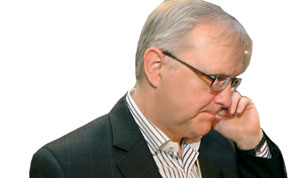
| Olli Rehn |
A loan for Spanish banks agreed by the eurozone will be critical for calming market turbulence in Europe and helping contain contagion from the debt crisis, the EU’s top economic official said yesterday.
In an interview with Reuters, Economic and Monetary Affairs Commissioner Olli Rehn said that while Spain’s banking sector needed to be reformed as part of the deal, no new conditions would be put on the wider economy, already facing belt-tightening measures to shore up a strained budget.
“I am confident this will send a strong signal to the markets that the euro area is ready to support Spain in its efforts to restructure and recapitalise its banking sector,” he said.
Rehn was speaking a day after finance ministers of the 17 countries that use the euro agreed to lend Spain up to €100bn ($125bn) to shore up its teetering financial sector.
No precise amount was set because Spain said it needed time for an independent assessment of its banking sector’s capital needs, due to be delivered in less than two weeks.
Aid for Spanish banks, burdened by bad debts since a property bubble burst, would make Spain the fourth country to seek assistance since Europe’s debt crisis began.
European shares, the euro and oil took a hit in recent days because of concerns that Europe’s debt crisis was spreading and Spain would need to be bailed out. But Rehn said Saturday’s decision would send a positive signal.
“We are ready to support Spain ... which is critical for calming down market turbulence in Europe and (ensure) the proper functioning of the financial system in Spain,” he said.
“This is important in order to ensure credit flow to companies and households in Spain and that we can contain the contagion,” he added.
Rehn said the level of public debt in Spain was under control, adding that Madrid was taking “very determined action” to sustain its public finances.
“This financial assistance for recapitalisation of the banking sector is indeed directed at the banks, so is its conditionality,” he said. “There will be no new conditions as regards fiscal policy and structural reforms.”
With the rescue of Greece, Ireland, Portugal and now Spain, the European Union and the International Monetary Fund have now committed around €500bn to finance European bailouts.
The Spanish government has gone to great lengths over the last day to avoid calling the aid agreement a “rescue”, because financial bailouts in the past implied humiliating conditions and surveillance by European officials.
Rehn said Spanish Economy Minister Luis de Guindos was right in saying on Saturday that banking aid did not amount to a full rescue package, and said reforming the banking sector should save Spain from having to ask for more help.