


 |
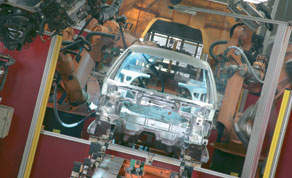
| Volkswagen assembly plant in Shanghai. VW was the first overseas car maker to enter China three decades ago |
Volkswagen elevated China’s status within its sprawling empire and re-asserted control over its wayward trucks brands with an extensive overhaul of senior management as it bids for market dominance.
The first overseas car maker to enter China three decades ago, Volkswagen and its two local partners are investing €14bn ($17.3bn) up to 2016 to build a host of factories around the country, including one in the impoverished western city of Urumqi home to a Muslim ethnic minority.
Volkswagen has been scooping up brands like Scania , MAN, Porsche and Ducati in recent years as part of an effort to surpass General Motors and Toyota at the top of the industry by 2018.
In order to boost growth, VW will create a management board position dedicated solely to China, it’s single largest market, which will be run by Jochem Heizmann, a board member who has been heading up the group’s commercial vehicles businesses.
“They’re admitting that China is so unique a market that they can’t manage it together with the other businesses — it’s not a different country, it’s a different planet. You need to treat China independently from the rest and not tether it to the mother ship,” said industry analyst Christoph Stuermer from IHS Automotive.
Karl-Thomas Neumann, the former head of auto parts supplier Continental who returned to VW after losing a power struggle, has so far been heading up the group’s operations in China, but not as a member of the management board.
“We will look for new tasks within the company for Neumann,” said Volkswagen Group chief executive Martin Winterkorn at a press conference yesterday in Stuttgart.
It’s unclear whether Neumann, who has even been named by analysts as a possible candidate to replace Winterkorn as VW CEO when he retires, will stay with the company.
Heizmann’s previous responsibilities on the board would be taken over by Leif Oestling, the chief executive of Scania, who successfully fought off a hostile bid by German rival MAN.
Since both truck makers in the meantime have lost their independence to Volkswagen, Oestling’s new duties mean he will be in charge of more closely integrating Scania with MAN — a task that has so far yielded few results in recent years.
By better linking operations at the two former rivals, the company expects to fetch about 200mn euros annually in extra revenue and profit, Winterkorn said. “Maybe a little bit more.”
Volkswagen patriarch Ferdinand Piech had however once told MAN shareholders an alliance between the two could help generate synergies of as much as 1bn euros, so the latest figure illustrates just how slow the progress has been.
Shares in MAN were the only gainers among German blue chip companies on Friday, as investors speculated VW would extend its control over MAN either by buying more shares and potentially launching a domination and profit transfer agreement.