


 |
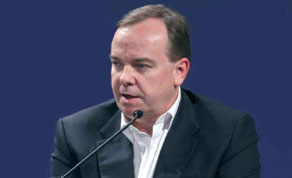
| Gulliver: ‘We remain comfortable with the emerging markets (outlook) ...’ |
HSBC Holdings, Europe’s biggest bank, said paying rising wages in Brazil, China and other emerging markets is the price of avoiding the slowdown being felt by most of its rivals as it posted the largest 2011 profit by a western bank.
HSBC, which makes over three quarters of its profits outside Europe and North America, said yesterday it was confident growth in Asia, Latin American and the Middle East would continue to offset sluggish European economies this year.
However, with costs rising 10% and its wages bill up over $1bn in 2011, chief executive Stuart Gulliver told reporters it would be a challenge to meet the bank’s 2013 target for reducing costs as a proportion of income.
Banks across Europe have been posting billions of dollars of losses as the eurozone sovereign debt crisis has hit their trading profits, and as they strive to meet tough new rules aimed at preventing a repeat of the 2007-09 banking crisis.
HSBC which has been relatively unscathed thanks to its strength in faster-growing emerging markets, said yesterday it expected that trend to continue, despite fears some of these economies were overheating and could see an abrupt slowdown.
“We remain comfortable with the emerging markets (outlook) and are confident that GDP growth in emerging markets will be positive and China will have a soft landing,” Gulliver said. But he predicted the eurozone economy would flatline this year, with “marked recessions” in some southern countries.
HSBC, with 89mn customers in 85 countries, said pretax profit rose 15% to $21.9bn in 2011, compared with a forecast for $22.2bn in a Reuters poll.
The figure fell short of the group’s record profit of $24.2bn in 2007, but beat all other western banks that have reported so far for last year, including US rival JP Morgan, which made a $19bn profit.
The world’s most profitable banks in recent years have been Chinese groups ICBC, which made a 215bn yuan ($34.2bn) pretax profit in 2010, and China Construction Bank which made 175bn yuan ($27.8bn).
HSBC’s profit was boosted by a $3.9bn accounting gain on the value of its debt. Stripping that out, underlying pretax profit fell 6% to $17.7bn, due in part to rising wages in emerging markets and to restructuring costs.
Gulliver was paid £8mn ($12.7mn) last year – including a £2.2mn bonus – down from 8.4mn in 2010 when he ran the investment bank.
HSBC said it paid another banker, whom it declined to name, £7mn, while 192 employees took home more than £1mn each, including 64 in Britain.
“Wage price inflation and competition for staff is very high. We are not the only people to work out that the emerging markets have high GDP growth and there’s a limited pool of talent,” Gulliver said, singling out Brazil, India and China as seeing particularly big increases in wages.
HSBC would continue to pay competitively in these markets, as the growth being delivered made the investment worthwhile, he said, adding that would keep pressure on costs.
While the group remained on track to hit its return on equity target of 12-15% by the end of 2013, it would be a “challenge” to achieve its cost-to-income goal of 48-52% by then, he said, adding that was mainly due to a difficult macro-economic backdrop holding back income.
Its cost-to-income ratio deteriorated to 61% in 2011 from 55.6% the year before for its underlying business.
Gulliver said HSBC would offset some of the pressure by redoubling its cost-cutting efforts elsewhere in the business, and said it was confident of hitting the upper end of its $2.5-$3.5bn annual cost savings range.
“They’ve had a good run so I can’t get too enthusiastic, but they’re (HSBC) going in the right direction and it’s a good bet in a difficult sector,” said Brown Shipley fund manager John Smith, who holds HSBC shares in his portfolio.
HSBC said profit at its investment bank fell 24% to $7bn, hurt as the eurozone debt crisis slowed capital markets activity in the second half of last year.
Loan impairment charges and other credit risk-related provisions, however, fell $1.9bn to $12.1bn.
HSBC said it paid out $4.2bn in bonuses, down 2% on 2010. Banks are coming under intense pressure from politicians and the public to rein in pay awards because of the role of the sector in the world’s economic problems.
The bank, which lifted its 2011 dividend by 14% to 41 cents a share, has cut 11,000 jobs so far under Gulliver’s plan. He said yesterday that total job losses might be less than the 30,000 originally envisaged.