


Trade in the Middle East and North Africa (Mena) region is expected to grow by 131% to 2026, faster than world trade growth over the same period (86%), according to HSBC’s latest “Trade Connections” report.

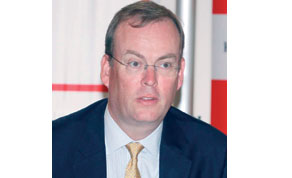
Reid: ‘Businesses should continue to feel confident about the future.’
While hydrocarbons remain a key trading focus for the region, the increase in importance of iron and steel underline the pace of industrial growth in Mena.
The quarterly forecast shows that not only will the Mena region grow its trade at a substantially faster rate than the rest of the world, but that international business are becoming less reliant on Europe and the US for trade links. The data predicts that the region’s current largest trading partners for 2012 will be the US, China and India, reflecting the dominance of oil, gas and hydrocarbons to the region.
Qatar’s trade is forecast to grow by 150.74% to 2026 and substantially faster than the world average throughout the next 15 years. This is due to its strong economic position compared to other countries in the past four years.
“Qatar fared well throughout 2011 despite the global economic downturn and the Eurozone debt crisis. In 2012, the country’s general outlook remains positive,” the report said.
Tim Reid, HSBC regional head (commercial banking) said: “There is no denying the challenges the region has faced and continues to face this year. Nevertheless, the data very much supports our belief in the long-term economic potential of the region.
“As the region’s leading international trade bank, we know that trade lies at the core of ensuring international economic recovery particularly as businesses explore new trade corridors and take advantage of the new global opportunities.
“The Middle East as a whole remains an ideal hub for North to South, East to West and intra-regional trade flows. Businesses should continue to feel confident about the future.
“While two-thirds of the world’s discovered crude oil reserves are in the Mena region, we shouldn’t just see the region as a pure hydrocarbon story when we look at long-term trade. Diversification is not just apparent, but predicted to grow in importance.
“Whether we look at food commodities or electronic circuits, we get a picture of a region that’s not going to be dependent just on oil. And, when we look at our predictions for the region, it is no surprise that iron ore tops the table (14.37%) given the pace of industrial growth in the emerging markets.”