Saudi Arabia’s bourse hit a three-and-a-half year high in higher turnover yesterday amid an upbeat Gulf market sentiment after Greece sealed its second bailout package, while telecom operator Mobinil weighed on Egypt after posting earnings.
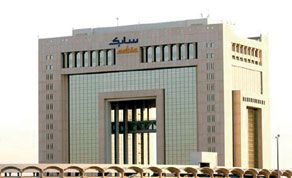
Saudi petrochemical stocks led gains, with bellwether Saudi Basic Industries Corp (Sabic) rising 2.9% to its highest close since August 2011. The sector’s index added 1.6%.
“Petrochemical stocks will be strong going forward because oil price is back on track ... economic fundamentals are improving and concerns about global demand are subsiding,” said a Riyadh-based fund manager who asked not to be identified.
The index rose 0.9% to its highest close since October 2008. Turnover climbed to $3.07bn, a high of about four years.
“Saudi Arabia is still lagging behind the trend in the global markets, despite the strong local fundamentals,” the fund manager added.
Heavyweight banks were also up. Al Rajhi Bank gained 1%, Samba Financial Group climbed 2.3% and Riyad Bank rose 1.2%.
In Egypt, the main index slipped 2.4%, with telecom shares falling after Mobinil posted a quarterly loss.
Mobinil, which dipped 1.7%, said last year’s political turmoil caused it to lose 177mn Egyptian pounds ($29mn) in the fourth quarter, compared to a net profit of 342mn pounds a year earlier.
Orascom Telecom Media Technology tumbled 6.1% and Orascom Telecom 4.1%, while Telecom Egypt, which is due to report results before the market opens on Thursday, lost 2.9%.
GB Auto advanced 1.3% after it said it agreed to assemble cars provided by China’s Geely Automobile and begin distributing them in North Africa.
In Dubai, the index rose 1.7% to an eight-month high, but analysts warned the rally may be over-extended.
Bellwether Emaar Properties jumped 3%, Dubai Financial Market, the only listed Gulf Arab bourse, rose 2.4%.
“The next target is the 1,600 resistance, which matches a long-term trend line resistance,” said Bruce Powers, head of research at Trust Securities. “Some pullback or consolidation would be healthy at this point, before continuing higher.”
Dubai’s index fell 17% in 2011 and remains 75% below a 2008 peak despite recent gains.
In Abu Dhabi, the benchmark climbed 0.9%, rising for a third day to reach a 20-week closing high.
Telecom firm Etisalat rose 2.2% after proposing a 60% dividend for 2011.
Elsewhere in the Gulf, Kuwait’s measure eased 0.3% to 6,098 points; Oman’s index slipped 0.2% to 5,667 points and Bahrain’s measure slipped 0.4% to 1,145 points.