


Bloomberg/Istanbul
QNB’s talks to acquire Denizbank, the Turkish lender put up for sale by Dexia, are stalled over price, sources have said.

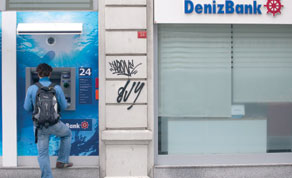
A customer uses an automated teller machine (ATM) outside the headquarters of Denizbank in Istanbul. Dexia is seeking about 1.5 times Denizbank’s book value of $2.1bn, while QNB is prepared to pay between 1 and 1.2 times, sources have said
Dexia, which is being broken up after the European debt crisis reduced its ability to obtain funding, has reached out to other potential buyers, one source said.
The Franco-Belgian lender is seeking about 1.5 times Denizbank’s book value of $2.1bn, while Doha-based QNB is prepared to pay between 1 and 1.2 times, the people said. While the two sides may still reach an agreement, Dexia could also decide to end the process and begin a new search for a buyer at a later date, the sources said.
Denizbank surged more than 50% since early October, following reports Dexia would sell its majority stake in the bank under its rescue plan. The lender is valued at about 9.3bn liras ($5.3bn), according to the share price, which rose 3.2% to 13 liras in Istanbul yesterday. Less than 0.2% of the shares are traded, with the remainder owned by Dexia, Bloomberg data show.
A spokesman for Dexia, based in both Paris and Brussels, declined to comment. A spokesman for QNB could not immediately be reached for comment.
While QNB is in talks with Dexia, Denizbank will “cost us a lot” and the bank won’t distribute “more profit than necessary” for the deal, QNB chairman HE Yousef Hussein Kamal, who is also Qatar’s Minister of Economy and Finance, had told shareholders on January 29.
European banks are seeking to sell assets, portfolios and units to raise cash amid the region’s debt crisis and to meet tougher capital requirements. Lenders including Deutsche Bank and France’s Societe Generale have announced plans to shed more than $1tn in assets, according to Bloomberg data.
QNB, Qatar’s largest lender, was the last serious buyer for Denizbank after earlier bidders including HSBC Holdings and Sberbank dropped out, people familiar with the situation had said in January.
A month earlier, Banco Comercial Portugues opted to keep its Polish unit. Both Denizbank and BCP’s Warsaw-based unit were examples of profitable businesses in attractive markets that lost bidders, people familiar with the discussions said in December.
The European Banking Authority told the region’s banks to raise €114.7bn ($151bn) in fresh capital in December to respond to the sharp fall in the value of securities issued by euro-area governments.
The agency also required banks to keep a core Tier-1 capital ratio of 9% and hold additional reserves, called a sovereign buffer, to protect against default on debt tied to weaker euro-area economies.
Dexia put Denizbank up for sale as part of a rescue plan undertaken by the French and Belgian governments. The firm is putting its most troubled assets into a so-called bad bank and trying to sell profitable units, including Denizbank, to raise cash.