


 |
|
|
Qatar could save up to $30bn, or one-fourth of its national economy, by encouraging more public-private partnerships (PPP) and focusing on key areas where such partnerships offer huge potentials, according to a report.
“If Qatar is able to achieve an average procurement and project life cycle savings of 10% on project with a potential economic multiplier impact (in multiples of 2), the possible overall savings would be around $30bn, equal to 25% of the country’s annual gross domestic product,” said the report ‘PPP: A Vehicle of Excellence for the Next Wave of Infrastructure Development in the GCC’, jointly sponsored by the Qatar Financial Centre Authority and Ministry of Business and Trade.
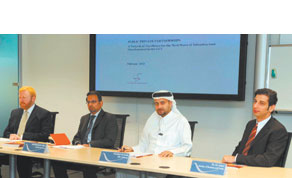
The report was launched by QFCA director (strategic development) Yousuf al-Jaida in the presence of Amer al-Adhadh, director (private sector and enterprise development), Ministry of Business and Trade; and Mohamad Athar and Aamir Rehan, Markab managing partners.
The quantum of planned infrastructure spending indicates the realising efficiency gains can generate “significant” savings, the report said, adding these savings could be redirected to achieving other core objectives of human capital development and diversification of Qatar’s economy.
PPP outcomes could include efficiency through on-time and within cost delivery, long-term commitment of the private sector in maintaining infrastructure assets and providing know-how, transparency in the procurement process: additional avenues for developing the skills of the Qatari workforce and building depth in capital markets.
Qatar has a massive infrastructure spending plan for the next 10 years leading up to the hosting of the 2022 World Cup. The country is expected to spend between $120bn and $150bn in the next five years in the non oil and gas sectors.
Asserting that PPP can have a strategic place in Qatar’s on-going and planned infrastructure development as all the building block are already present; Athar said there is an opportunity to leverage on these building blocks such as an extensive pipeline of infrastructure projects, resident PPP expertise (from power and hydrocarbons sectors) and growth momentum.
Since Qatar’s infrastructure plans are among the largest and most diverse, it can play a leadership role in the region in developing PPP in sectors such as sports, transport and railways, healthcare and education, the report said.
Regarding the sports infrastructure, it cautioned that considering the strategic importance of the 2022 World Cup, any decision with respect to the private sector participation needed to be studied carefully.
Although there are precedents of having PPP as a model for building and managing sports facilities, Qatar’s position is truly unique, it said, adding “understanding the potential revenue mode, during and after the FIFA Cup, would be the key to deciding the appropriate model.”
Referring to Qatar’s plans to set up a number of economic and development zones, the report said in order for any economic zone to be successful, there has to be tangible a proposition which attracts private investors and entrepreneurs.
“PPP can play a role in management of economic zones provided zones are not treated as merely real estate propositions,” it said.
On the social infrastructure, the report said education and healthcare offer innovation opportunities in the PPP domain.
Requiring ‘home-grown’ solutions, it said public sector can offer financing to nurture innovations in education and healthcare sectors.
“Delivering fund through an incubation fund, especially when the Qatari government has the financial capacity to do so, can nurture the innovation culture as well align interests of all the stakeholders,” Rehan said.