Reuters/London
Foreign landlords, including Qatar, own over 60% of London’s Bond Street and Oxford Street, having snapped up numerous stores in the past five years as investors sought safe havens for their cash, data from Savills showed.

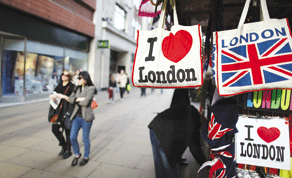
Pedestrians pass a stall on Oxford Street. Qataris and investors from other countries now own 61% of two of London’s top shopping streets
The property consultancy said foreign investors were also attracted to London by the weakness of sterling, with demand pushing total property sales to over £800mn ($1.3bn) on Bond Street and £2bn on Oxford Street since 2006.
Investors from countries, besides Qatar, such as Denmark, Libya, Hong Kong and Canada now own 61% of Oxford Street, while five years ago 96% of the street was held by UK funds and British and Irish private investors, Savills said.
Similarly on Bond Street, 69% of the location’s properties are owned by overseas investors, up from five years ago when only 14% was foreign owned.
While UK investors are still Bond Street’s biggest single owners at 22%, the French and Danish both own 13.6%, while investors from China, the Middle East, Singapore and Thailand hold a combined 19.1%.
Bond Street and Oxford Street are the UK’s two most expensive streets for retail rents, occupying second and sixth place respectively in a 2011 Cushman and Wakefield survey of Europe’s priciest shopping streets.
“We’re seeing rental growth of up to 90% in some sections of the streets, and that’s set to continue,” Senior Surveyor Jonathan O’Regan, from Savills’ central London investment team, told Reuters.
“There’s also huge uncertainty elsewhere in all these people’s portfolios ... Property on Bond Street is probably seen as the safest haven for a good diverse portfolio,” he said.
Property yields on the two streets have tumbled to record lows in the past year on the back of investor demand. In July, the Cartier store at 40-41 Old Bond Street was sold for £18mn, reflecting a yield of 2.8%.
The strength of the investment market also reflects the robustness of retailer demand for shop space on Bond Street and Oxford Street, which has seen retailers paying significant premiums and rents to take over prized locations.