Reuters/Dubai
Most regional markets edged higher yesterday, clawing back losses from the previous day, after Libyan rebels took control of Tripoli, raising hopes the conflict in the oil exporter country may be drawing to a close.

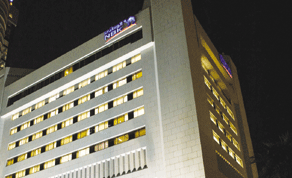
National Bank of Kuwait jumped 6% yesterday after International Bank of Qatar (IBQ), in which it owns 30%, sold its Islamic banking retail operations to Qatar’s Barwa Bank in the first sale of an Islamic portfolio since Qatar’s decision banning conventional banks from offering Islamic banking services
“Unless we get a sharp, rapid drop in the price of oil, triggered by genuine fears of the US economy going back into recession, I think we’re ok,” said Ibrahim Masood, senior investment officer at Mashreq bank. “Given the kind of growth fears in developed markets, a slightly lower price of oil is actually a good thing—it acts as a tax cut in these oil consuming countries. Even with the price in the mid $70s or so, our region as a whole is not impacted negatively.”
UAE bourses edged higher as investors picked up cheap stocks, although limited gains suggested a wary approach due to global concerns.
Retail-driven stocks held attention with Emaar Properties leading the turnover, and rising 1.1%. Logistics operator Aramex gained 2.9% and telecom operator du advanced 2%.
Dubai’s benchmark rose 0.9%, trimming its 2011 losses to 10.2%.
“The markets are consolidating after the weakness we saw yesterday (Monday)—investors are not too worried about oil prices, which are holding steady,” said Sleiman Aboulhosn, assistant fund manager at Al Masah Capital. “There is optimism that Gaddafi will be out anytime now.”
Abu Dhabi’s benchmark ended 0.6% higher, lifting from Sunday’s near 24-week lows.
Aldar Properties gained 0.9%, accounting for more than a third of all shares traded on the index. Etisalat rose 0.5%.
Oman’s index slipped 0.2% and volumes slumped to a one-week low, as investors unwound positions ahead of the Eid public holiday which marks the end of the fasting month of Ramadan.
Bank Muscat was the main drag, falling 1.2%.
Investors are still wary of Renaissance Services after the company reported fraud at its marine unit Topaz and first-half net profit fell 77%.
The oil services firm ended flat at 0.57 rials, having slumped to a 2009-low last Wednesday.
“The stock has reacted sharply post disappointing Q2 results and we believe that it has also priced in for the impending concerns surrounding Topaz,” said Kanaga Sundar, Gulf Baader Capital Markets head of research. “We recommend a neutral rating on the short term and an accumulate rating over a long term horizon. We have arrived at weighted fair value of 0.665 Omani rials.”
“Market volumes continue to remain dull, expect activity to pick up post Eid holidays,” he added.
Elsewhere, Kuwait’s index ended 0.3% higher, rising from Sunday’s seven-year low.
National Bank of Kuwait jumped 6% after International Bank of Qatar (IBQ), in which it owns 30%, sold its Islamic banking retail operations to Qatar’s Barwa Bank in the first sale of an Islamic portfolio since Qatar’s surprise edict banning conventional banks
from offering Islamic banking services.
Barwa Bank is a unit of Barwa Real Estate Co, which advanced 0.2%.
Other heavyweights also supported the index, with Zain and Gulf Bank rising 1.1% each.
Saudi Arabia’s index ended flat, as bargain hunters picked up attractive stocks after two sessions of losses that dragged the index to a 23-week low.
Banking stocks led the rally with Al-Rajhi Bank and Samba Financial Group gaining 0.7% each.
Bahrain’s measure climbed 0.3 to 1,264 points.
‘Overweight on GCC telecom; neutral on chemicals’
Credit Suisse has tactically revised its sector allocation in the Gulf Co-operation Council region in anticipation of renewed debate over a “double-dip recession” in the global economy. It noted the latest weak US PMI data and said the eurozone’s sovereign crisis is far from over amid concerns of short-term funding stress in the dollar at some European banks. “GCC equity markets [especially Saudi Arabia] are mainly driven by retail investors’ sentiment, which is likely to deteriorate,” the bank said. Credit Suisse is increasing “the exposure to defensive sectors such as telecoms and consumer staples and no longer prefers (neutral) chemicals-as they are most correlated to global economy”. The bank is underweight on banks and the real estate sectors.