


 |
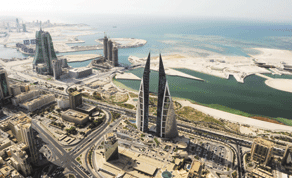
| Aerial view of the skyline of Manama, Bahrain. On an annual basis, GDP growth of the island kingdom, at some $14bn the smallest economy in the Gulf, slowed to 1.8% in the first quarter from a revised 3.7% in October-December 2010 |
The small non-Opec oil exporter saw its real gross domestic product growing by a sharply revised 0.2% in the final three months of 2010 compared with the previous quarter, the data from the Central Informatics Organisation showed.
On an annual basis, GDP growth of the island kingdom, at some $14bn the smallest economy in the Gulf, slowed to 1.8% in the first quarter from a revised 3.7% in October-December 2010, the data also showed.
“I guess it could have been worse. Down 1.4% does not look too bad given the backdrop and given some of the horror stories about what was happening in Bahrain,” said Daniel Kaye, senior economist at National Bank of Kuwait.
The island kingdom, a financial hub where nearly $9bn in mutual funds is parked, had been rocked in February and March by its worst public unrest since the 1990s. NCB Capital estimated economic losses at $1bn, which makes up 17% of the first quarter GDP.
Analysts polled by Reuters in June slashed their 2011 growth forecasts to 2.7% from 3.4% expected in March. Some said yesterday the first quarter GDP reading was in line with expectations.
“A lot of analysts have already downgraded Bahrain. This (first quarter data) seems to be consistent with that,” said Giyas Gokkent, head of research at National Bank of Abu Dhabi. “We were expecting adverse impact on the financial sector. If you look at the financial sector in nominal terms it was flat year-on-year and in real terms there was actually some growth, which is surprising,” he said.
In July, Central Bank governor Rasheed al-Maraj expected the economy to expand by 3% this year, less than 4.5% seen by the finance ministry in March. Bahrain’s financial sector, which accounts for around 22% of the GDP, has been only slowly picking up from the global financial crisis and a regional property crash. It grew 1.3% year-on-year in real terms in January-March.
Hotels were the most heavily hit by the protests, showing a 30.3% output slump, while restaurants lost 4.6% from a year ago.
The real estate sector, which has yet to return to levels seen before the global crisis, was down 2.4% in the first quarter. Transport and communication and government services were the main GDP drivers, analysts said, growing at a 12.0% and 4.8% annual clip, respectively.
Output of the hydrocarbon sector, which accounts for around one third of the economy, was flat in real terms compared with the same period a year ago. It jumped 21.7% in nominal terms as crude prices soared to $107 per barrel fuelled by revolts in the Arab world.
Bahrain, which pegs its dinar to the US dollar, does not release quarterly GDP data by expenditure. The statistics office revised all 2010 quarterly output data but revisions left the full year growth at previously reported 4.5%.
The country’s nominal GDP increased by 15% year-on-year to 2.2bn dinars ($6bn) in the first quarter, the data also showed.