By Santhosh V Perumal
Business Reporter
Global credit rating agency Moody’s yesterday assigned a first time long-term local currency issuer rating of ‘A1’ to Qatar Electricity and Water Company (QEWC) with a “stable” outlook.

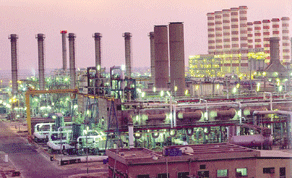
QEWC’s Ras Abu Fontas plant. All its plants are gas-fired and gas purchase agreements are all with Qatar Petroleum
The rating is mainly supported by the beneficial contractual framework put in place by Qatar that significantly reduces its exposure and its Qatari joint ventures to common industry risks for utilities - namely, regulatory, demand and price risks.
The company benefits from a stable operating cash flow stream, which is derived from secure, long-term power purchase agreements as well as from power and water purchase agreements with the 100% government-owned Qatar General Electricity and Water Corporation (Kahramaa) acting as sole off-taker.
It also benefits from a government guarantee with respect to its financial obligations under contracts with QEWC for plants commissioned after 2002. All its plants are gas-fired and gas purchase agreements are all with Qatar Petroleum.
“Capacity-derived payments are structured in all agreements to ensure that fixed operating costs, investment costs, an agreed return on equity and comprehensive debt servicing are covered on a cash basis,” Franck Nowak, a Dubai-based Analyst in Moody’s Corporate Finance Group and lead analyst for QEWC, said.
The cost pass-through mechanisms that are built into the tariffs mitigate QEWC’s exposure to any volatility in prices and gives QEWC’s financial performance stability, according to the analyst.
“QEWC’s financial profile is currently characterised by high leverage relative to global peers, although it benefits from a strong contractual framework, ensuring returns on equity and debt servicing at the project level,” he added.
QEWC is also expected to follow a de-leveraging trend in the medium term as the company has no need to fund either new investments or the construction of new plants given the current excess capacity in both electricity (35%) and water (23%). Kahramaa expects this excess capacity to be sufficient to meet the needs implied by the foreseen economic growth in Qatar, to which Moody’s assume QEWC will remain predominantly exposed.
Overseas expansion, which is one of QEWC’s strategic goals, could also bring forth regulatory uncertainties as it may have to work in legal and regulatory environments different from those of Qatar, Nowak said.
“Partly mitigating our concerns is the strong recurring cash flow from QEWC’s operating plants, which provides the company with a buffer against some of these uncertainties, and our expectation that QEWC will continue to exercise prudent financial management,” he said.
On the stable outlook, Moody’s said it reflected that there will be no material adverse changes in the framework within which QEWC currently operates.
The rating agency expects QEWC to maintain adjusted FFO (fund from operations) interest coverage at above (multiples of) 3.5 at all times, with FFO to debt migrating towards the high teens and debt to book capitalisation trending towards 70%.
However, Moody’s said the rating could be downgraded if QEWC’s credit strength deteriorates substantially, such that its adjusted FFO interest coverage falls below (multiples of) 3.5.