


Bloomberg/Riyadh
Saudi Arabian shares tumbled for a third day yesterday, sending the benchmark index to its largest intraday drop since March, amid rising concerns about the global economy after Standard & Poor’s cut the US’s credit rating for the first time.

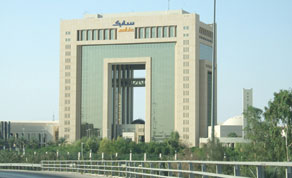
Saudi Basic Industries Corp, the world’s biggest petrochemicals maker, slumped 5.8% to 97.75 riyals yesterday, the sharpest decline since March 1
The 147-company Tadawul All Share Index slumped 5.5% to 6,073.44, the steepest decline since March 1, at the 3.30pm close in Riyadh. All 15 industry groups fell. The gauge has fallen 10.5% from the year-high of 6,788.42 on January 16.
Saudi Basic Industries Corp (Sabic), the world’s biggest petrochemicals maker, fell the most in five months. Al Rajhi Bank, the kingdom’s largest publicly traded lender by market value, reached its lowest price since March.
“The Saudi market is reacting to the steep declines in global markets over the weekend,” said Asim Bukhtiar, an equity analyst at Riyad Capital. “Growing concerns of the US relapsing into recession are driving sentiment.”
US stocks fell the most in 32 months this week and European stocks posted their biggest weekly loss since November 2008. The S&P 500 slumped 7.2%, the biggest weekly drop since November that year. The Stoxx 600 Europe Index tumbled 9.9% to 238.88 this past week, the gauge’s lowest level in 13 months.
Oil tumbled 9.2% this week, the biggest drop since the week ended May 6. Crude for September delivery was settled at $86.88 a barrel on the New York Mercantile Exchange. Saudi Arabia holds 20% of the world’s proven oil reserves.
“The combination of the global equity and commodities meltdown during the Saudi weekend, and to a lesser extent the expected downgrade by S&P, is having an impact on all sectors of the market,” said Fuad Aghabi, a director at Ajeej Capital, in Riyadh.
Standard & Poor’s downgraded the US’s AAA credit rating for the first time since 1941. S&P lowered the US one level to AA+ while keeping the outlook at “negative”.
The US immediately lashed out at S&P, with a Treasury Department spokesman saying the firm’s analysis contains a $2tn error. The rating may be cut to AA within two years if spending reductions are lower than agreed to, interest rates rise or “new fiscal pressures” result in higher general government debt, the New York-based firm said on Friday.
“At this point, the impact of the ratings downgrade is not evident,” said Bukhtiar. “Regional markets will take their cue from global markets on Monday when they open.”
Saudi Arabia’s holdings of foreign securities rose 12% this year to a record 1.32tn riyals ($350bn) as of June 30, Saudi central bank data show.
Sabic slumped 5.8% to 97.75 riyals, the sharpest decline since March 1. Al Rajhi declined 5.2% to 68.25 riyals, the lowest price since March 2. National Industrialisation Co (Tasnee) dropped 7.3%, the sharpest fall since April 4, to 39.30 riyals.
A total of 144 shares dropped while one stock gained. Rabigh Refining and Petrochemicals Co sank 9.9% to 22.60 riyals and Kingdom Holding Co weakened 9.6% to 7.10 riyals.
“This is a reaction to global instabilities, however, the fundamentals of the Saudi market remains strong, evidenced by very good first-half results,” said Aghabi.
Saudi Arabia’s stock exchange is the only Gulf Arab bourse open on Saturdays.