Reuters/Dubai
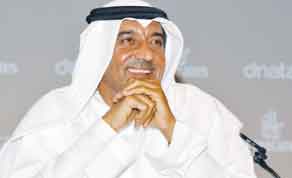
Dubai’s ruler named his uncle and close adviser Sheikh Ahmed bin Saeed al-Maktoum as chairman of Emirates NBD yesterday, in a move that may signal changes to come in Dubai’s banking sector.

The appointment of Sheikh Ahmed, a respected businessman who helped steer Dubai through its debt crisis, will lend stability and credibility to the changes in the banking sector, observers have said
Sheikh Ahmed, chairman of Emirates airlines, replaces Ahmed Humaid al-Tayer, who is also governor of the Dubai International Financial Centre (DIFC), state news agency WAM said.
The two men also helm Dubai’s Supreme Fiscal Committee and were key figures during the emirate’s debt crisis.
The bank’s shares rose 1.2% on the Dubai bourse.
“It’s an interesting change, it’s a change that the market was not expecting,” said Mohamed Ali Yasin, chief investment officer at CAPM Investments in Abu Dhabi. “This could signal this summer will not be a dull summer after all. This could be signaling a new set of changes, going through local departments whether in Dubai or Abu Dhabi.”
UAE President Sheikh Khalifa bin Zayed al-Nahayan reshuffled the Supreme Petroleum Council on Saturday and appointed a new director general for Abu Dhabi National Oil Co.
Dubai’s government, which owns a 55.6% stake in Emirates NBD, also replaced board members Eissa Saleh al-Gurg, Fardan Ali al-Fardan, Khalid Jassem Bin Kalban, Abdullah Ahmed Lootah and Hamad Mubarak Bu Amim.
They are all key figures at the bank, created by the 2007 merger of two local lenders by order of Dubai’s ruler.
“They managed the bank through the (debt) crisis. Probably it’s the feeling of the government that it’s time to move on to a new breed of people,” Yasin said.
Emirates NBD was one of the largest lenders to debt-laden conglomerate Dubai World and has exposure to indebted Dubai Holding. The bank has said it expects an increase in non-performing loans in 2011.
WAM said Hisham Abdullah al-Kasem was named deputy chairman, replacing Abdullah Mohamed Saleh, who resigned from the post in May. Mohammed Obaid al-Shehhi, Mohammed Hadi Ahmed Abdullah al-Husaini and Shoaib Mer Hashim Khouri were appointed board members in the reshuffle.
The appointment of Sheikh Ahmed, a respected businessman who helped steer Dubai through its debt crisis, will lend stability and credibility to the changes, observers said.
Sheikh Ahmed also took charge of debt-laden conglomerate Dubai World as chairman in December, as Dubai bids to rebuild its tarnished brand name after the debt debacle.
Revamping the board of Dubai’s largest bank by market value could show the government is setting its sights on changes within the emirate’s banking sector, said Abdul Kadir Hussain, chief executive of Mashreq Capital.
“People change senior management and board because they want things to move in another strategic direction,” Hussain said.
“The general view is that Dubai’s banking sector is overbanked and, if you were to get some consolidation, then you could get some critical mass in terms of balance sheet.”
Hussain said issues in Dubai’s banking sector needed to be resolved, including the fate of troubled Islamic lender Dubai Bank, which the government took over in May.
Talk has swirled that Emirates NBD’s Islamic arm could buy Dubai Bank. The government said in May it was considering whether to continue running Dubai Bank on a stand-alone basis or merge it with another state-owned bank.
In its first-quarter earnings report, Emirates NBD said one of its 2011 objectives was to review its businesses and decide on divestments, increasing stakes or complementary acquisitions.
Separately, WAM said Sheikh Ahmed stepped down as chairman of Noor Islamic Bank. He will be replaced by Sheikh Ahmed bin Mohamed bin Rashid al-Maktoum.
Noor Islamic had also had been touted as a possible candidate to absorb Dubai Bank, speculation denied by Sheikh Ahmed in a statement last month.