QNA /Doha
Qatargas chief executive officer Sheikh Khalid bin Khalifa al-Thani expects higher demand for LNG with many countries considering cutting the use of nuclear energy in the light of Japan’s experience following the Fukushima Daiichi power plant incident in the earthquake that struck the country on March 11.

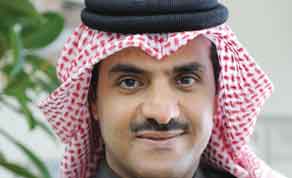
Sheikh Khalid: Committed to global environmental standards
Speaking to QNA in an exclusive interview, Sheikh Khalid pointed to discussions with Japan that would elaborate conditions for a number of long-term contracts to increase of LNG exports to Japan.
Qatargas has committed to supply for one year (from April 16) additional LNG equivalent to 60 plus conventional LNG cargo to Japan, demonstrating the company’s commitment to support long-term Japanese customers, he said.
Qatargas supplies a total of 6mn tonnes per annum of LNG to Japan under long term contracts. The first shipment of LNG was delivered to Japan in 1997.
On the possibility of exporting of additional 3mn tonnes, Sheikh Khalid said such decision could be determined by the Japanese government’s policy in terms of increasing or decreasing the country’s reliance on nuclear energy.
Qatargas would increase LNG shipments to Dubai, he said. The first cargo was dispatched in December 2006 through a Q-Flex vessel with LNG produced from Qatargas 2.
In 2008, Qatargas, Shell and Dubai Supply Authority (DUSUP) signed a series of agreements under which LNG would be supplied to DUSUP primarily from Qatargas 4 from 2011.
Continuing on the expansion plans Sheikh Khalid said, “We are in the process of debottlenecking the existing facility LR-1, adding extra capacity without major investment. The expansion of refinery’s portfolio supports Qatar’s vision of improving product distribution domestically and fully complies with international customers’ demands for cleaner fuel products.”
On the status of Qatar Helium 2 project that is slated to start production in 2013, Sheikh Khalid said, “Production is targeted for early 2013. When completed it will be the largest facility of such kind in the world. The EPS contract has been awarded to Air Liquide with whom we have a sales and purchase agreement for 50% of the production, 30% with Linde Gases and 20% with Iwatani Corp. Helium sales are expected to reach 1.3bn cu ft per year.”
Regarding marketing, he said, “Qatargas has existing long-term supply contracts around the world. Asia, with its large importers like Japan, China and India continues, to be an important market for us. Qatargas is focused on meeting its commitments to all its customers, including those in the liquid markets of the UK and the US.”
Replying to a question on how much LNG Qatar exports to the UK annually and its partnership with Centrica, Sheikh Khalid said, “Qatar supplied the UK with 15% of its total gas demand, which will go up to 50% by 2025. Our partnership with Centrica is significant, it underscores Qatargas’ commitment to the UK as one of the key gas markets.”
On the new LNG market in Dubai, he said, “Qatargas 4 project has a long-term sales agreement with Shell, which will supply LNG to Dubai, starting this year.”
Qatargas, overall investment so far is around $36bn. Total investment between 2011 and 2017 will be around €4.5bn (including Jetty Boil Off Gas (JBOG) project, Laffan Refinery’s Receiving and Loading Facility Project (RALF), Laffan Refinery 2, Diesel Hydro Treator (DHT) and Helium 2), Sheikh Khalid.
On the role of receiving terminals in propelling Qatar as a top LNG producer, he said, “Qatargas has invested in long-term capacity creation through the construction of large mega-trains and ships to transport our LNG efficiently; building of terminal capacity in different markets such as the UK (South Hook) and US (Golden Pass).
This creates flexibility and capacity in these markets. By securing access to the liquid gas markets of the US and the UK, Qatar was able to rapidly expand its LNG production.
“Since our contracts into these markets have diversion rights, we are able to capture new market opportunities as they appear rather than most projects which seek to do this only prior to their final investment decision. Our terminals in the UK and US provide us with tremendous options and will continue to do so for many years into the future. These terminals will also facilitate increased deliveries of LNG to the UK and US as and when the market requires it.”
At present Qatargas does not have plans for any new receiving terminal. The responsibility for future investments in overseas energy related infrastructure lies with Qatar Petroleum International (QPI), he said.
Sheikh Khalid said Qatargas is committed to global environment standards. “Qatargas is focused on reducing emissions to the lowest levels possible to meet or beat the international standards. For example the reduction in emissions from Q-Max/Q-Flex vessels (cutting the carbon costs of moving each molecule of LNG) compared to conventional LNG vessels; jetty boil off; flaring reduction by 98%; sulphur reduction programmes on our existing facilities; Laffan Refinery has zero flaring in line with EU regulations; waste gas from QG2 start-up is recycled in QG1 operation.
“Qatargas is currently undertaking the Jetty Boil-Off Gas Recovery Project, which will minimise boil-off gas flaring at LNG berths by making productive use of the gas that boils off during loading of LNG carriers at the Ras Laffan Port.
“Besides, the existing Qatargas 1 operations we have recently completed a suite of significant NOx (Nitrogen Oxides) reduction projects, with direct benefits to air quality in the region. The new mega-trains have been designed with highly sophisticated NOx mitigation equipment, which easily meets the strict Ministry of Environment NOx emission limits.
“Qatargas is concerned with promoting environmental education and awareness. As part of its corporate citizenship initiatives, we are actively involved with local schools and environmental organisations to promote the message of environmental protection and management,” Sheikh Khalid said.
Qatar is proactive on sustainable development and environmental protection. It is one of the pillars of Qatar National Vision 2030. The country has suggested to the World Trade Organisation on exempting gas and its byproducts from customs duties. Other Gulf states, too, are pushing for this.
“As the world’s largest LNG producer, Qatar supports this wholeheartedly. From a Qatargas perspective, I feel the WTO should pay attention to this initiative given the significant environment value it possesses and the impact it will have on reducing our carbon footprint,” Sheikh Khalid said.
Asked about the importance of Qatar hosting the World Gas Conference (WGC) in 2018, he said, “This event has never been held in the Middle East. One of the features of the conference is to provide a post-conference technical tour. We can provide the delegates a visit to the largest LNG facilities in the world.
“It would be a great privilege to host this event and offer our delegates not only a great technical and commercial programme but our Qatari hospitality as well. We have taken steps to set up an internal WGC bid committee comprising our marketing and public relations staff. This committee is working towards the required activities associated with the bid.”
Being a member of the IGU, was he optimistic on chairing the body from 2015 to 2018?
Sheikh Khalid replied, “This is the first time in the 80-year history of the IGU that there are four bidding countries. Thus the competition is very stiff. We have initiated a campaign to secure support from the IGU members to vote for us in this bid process.
“We will continue with our campaign through October when the IGU council will meet to vote for the winning bid. Thus we remain optimistic due to the work we are currently undertaking to secure support from the IGU members.
In March this year, Qatargas received the Green Award for its LNG Carriers at the 25th GASTECH Conference & Exhibition in Amsterdam, one of the premier platforms in the global gas calendar.
Responding a question on Qatargas’ support for the Gas Exporting Countries Forum (GECF) as a gathering of the world’s leading gas producers in elaborating a mechanism for gas pricing, Sheikh Khalid said the Qatari government can only judge the advantages of such a decision.
Sheikh Khalid reaffirmed Qatar’s position to secure a fair treatment for natural gas in the energy policy of international markets aimed at establishing a balance with oil market.