


 |
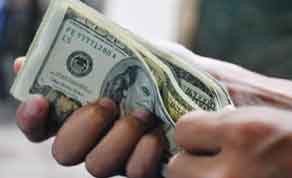
| The greenback yesterday tumbled to an all-time low against the safe-haven Swiss franc and hit a one-month trough against the yen |
European shares, however, pared losses late in the session as Greece said it successfully concluded talks with an EU/IMF inspection team, potentially paving the way for new loans to the debt-stricken country and fuelling a recovery rally in battered Greek shares.
The FTSEurofirst 300 index of top European shares closed 0.4% lower at 1,111.51 points, after falling to as low as 1,102points in afternoon trade, a level not seen since March 21. The index posted a weekly loss of 2%.
Around Europe, UK’s FTSE 100 index gained 0.1%, Germany’s DAX index rose 0.5%, and France’s CAC 40 ended flat.
Cyclical stocks featured among the top losers on Friday, with Rio Tinto down 0.8% and Total down 0.7%.
“The market has shown strong resilience over the past little while, but with mounting doubts on economic growth, we might be heading for a roller-coaster ride,” said Jacques Henry, analyst at Louis Capital Markets in Paris.
The biggest damage will be among cyclical and banking shares as the latest bout of sluggish US macro data sparks a sector rotation, said Henry, who has had a short-term negative bias on stocks.
Shares in Europe’s peripheral markets gained ground, led by the Greek benchmark index’s 4.4% rally.
The country has been struggling to meet targets set in the €110bn EU/IMF bailout that saved it from bankruptcy last year, and market players have been worried about the possibility of a haircut on the country’s debt—which would particularly hurt European banks.
Most European banking stocks gained ground, with Credit Agricole up 2.1% and BBVA up 1.4%.
The dollar fell broadly yesterday as weak jobs data added to evidence of a marked slowdown in the US economic recovery, while the euro hit a one-month high on optimism that Greece will receive its next aid payment and avoid restructuring its debt.
The greenback tumbled to an all-time low against the safe-haven Swiss franc and hit a one-month trough against the yen. While the greenback remains vulnerable to cheapening on economic weakness, the euro took out a key resistance level that could result in further gains.
The single currency surged to a one-month high against the US dollar after the European Union, European Central Bank and International Monetary Fund said the next tranche of international aid for Greece should be available in July.
The euro rose as high as $1.46069 on trading platform EBS.
It was last trading at $1.46050, up 0.8% on the day.
The rise above $1.45690 was the 61.8% Fibonacci retracement of last month’s decline from $1.49404 to $1.39680. Traders said the breach of that level was a bullish signal and suggests the euro could rack up further gains to $1.49.