


 |
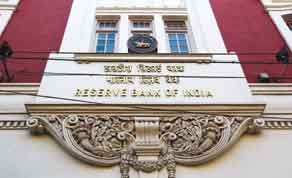
| The Reserve Bank of India yesterday asked lenders to set aside more funds to cover bad loans and double provisions for restructured debt as it sought to curtail risks tied to defaults by borrowers |
Indian stocks dropped the most among major indices in the world after rate increases by the nation’s central bank exceeded economists’ estimates.
State Bank of India paced losses among lenders after the Reserve Bank of India raised rates by half a percentage point, more than analysts’ forecast, and predicted inflation to remain at about 9% until September because of higher oil costs. Mahindra & Mahindra Ltd, the largest maker of tractors, fell the most in three months. Jaiprakash Associates Ltd, a builder of dams, roads and bridges, sank 8.2%.
“The central bank is reacting to the alarming situation of inflation,” said Manish Sonthalia, who manages $300mn in stocks for wealthy individuals at Motilal Oswal Securities Ltd in Mumbai. “I was expecting a 75 basis point increase by the end of the year, but there’s been front-loading of rate tightening.”
Sonthalia is avoiding companies that require large amounts of capital as borrowing costs are set to rise.
The Bombay Stock Exchange Sensitive Index, or Sensex, lost 463.33, or 2.4%, to 18,534.69 at the 3.30pm close in Mumbai. The gauge fell for the seventh day, its longest run of losses since November 2008, to close at the lowest level since March 24.
The S&P CNX Nifty Index on the National Stock Exchange slid 2.4% to 5,565.25. Its May futures settled at 5,562.25. The BSE 200 Index lost 2.3% to 2,292.08.
The Reserve Bank increased the repurchase rate to 7.25% from 6.75%. Only seven of 25 economists in a Bloomberg survey had predicted the move, while the remaining expected a quarter-point gain. The central bank boosted the reverse repurchase rate to 6.25% from 5.75%.
State Bank, the nation’s biggest, plunged 4.1% to Rs2,583.7, extending its five-day decline to 12%. HDFC Bank Ltd, the third-biggest lender, lost 2.4% to Rs2,235.65.
The Bombay Stock Exchange’s Bankex Index of 14 lenders fell for a seventh day, losing 3.1%, the longest run of losses since November 2008.
The central bank asked lenders to set aside more funds to cover bad loans and double provisions for restructured debt as it sought to curtail risks tied to defaults by borrowers. The bank capped investments by banks into so-called liquid plans by mutual funds that invest in debt instruments to reduce the risk of sudden large outflows during an economic slowdown.
Inflation in India is the highest after Russia among the so-called BRICs economies and if left unchecked could rekindle public protests and undermine Prime Minister Manmohan Singh’s government. Rising borrowing costs will slow economic growth this year and help ease inflation to 6% “with an upward bias” by March 31, 2012, Governor Duvvuri Subbarao said yesterday.
The rupee fell to a one-week low after overseas investors cut holdings of local shares on concern rising interest rates will boost costs and erode earnings at the nation’s companies.
The Indian currency dropped 0.4% to 44.5175 per dollar at the 5pm. close in Mumbai, according to data compiled by Bloomberg. It has advanced 0.2% in the past month, the second-worst performance among the 10 most-traded Asian currencies.