


 |
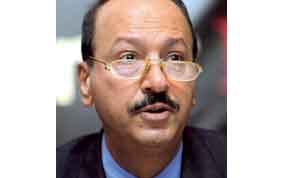
| Recent protests in Oman have left the banking sector largely unaffected and confidence intact, says Central Bank of Oman executive president Hamood bin Sangour al-Zadjali |
Central Bank of Oman executive president Hamood bin Sangour al-Zadjali told Zawya Dow Jones in an e-mailed response to questions that he expects the country’s economic outlook to be “positive in 2011” aided by higher oil prices.
“The recovery, which started in 2010, is expected to gather momentum in 2011,” al-Zadjali said.
The sultanate saw real gross domestic product growth hit 4.2% in 2010 after growing by only 1.1% in 2009. Real GDP growth is set to reach 4.4% this year, according to the International Monetary Fund’s World Economic Outlook published in April.
Oman, one of six Arab Gulf states that make up the Gulf Cooperation Council that also includes Saudi Arabia, emerged from the global and regional economic turmoil seen in 2008 and 2009 relatively unscathed, partly due to the country’s conservative banking sector policies.
The country, about the same size as Poland, has benefited also from a mix of increased oil production and higher crude prices. In recent years, Oman managed to reverse years of declining oil output, pumping 864,000 bpd of crude in 2010, up from a daily production of 860,000 barrels in 2009 and 812,000 barrels in 2008.
Oil prices have largely remained above the $100-a-barrel-mark since the beginning of the year.
“As the global recovery is expected to be sustained, crude oil prices may remain at an elevated level. This would provide comfort to the government to continue with its development programme,” al-Zadjali said.
Under the government’s eighth five-year development plan from 2011 to 2015, Muscat plans to spend an average 8.54bn Omani rials ($22.2bn) annually to create jobs for its young and growing population, and to diversify the local economy.
Al-Zadjali said recent protests in the sultanate had left the banking sector largely unaffected and confidence in tact. Oman, like some other countries in the region, saw some political unrest earlier this year, if on a much smaller scale. The country’s government, in a bid to end anti-government demonstrations, in early March announced a sweeping cabinet shuffle that included the removal of the country’s powerful economy minister.
Standard & Poor’s Ratings Services in March placed the sultanate’s long-term ‘A’ and short-term local and foreign-currency ‘A-1’ ratings on review for possible downgrade in response to the demonstrations.
“As the protests were localised and were for a very brief period, I do not think it would affect the confidence in the country’s banking system. Our banking system continued to remain sound, profitable and resilient,” al-Zadjali said.
An increase in non-performing loans, or NPLs, in the local banking sector last year was likely to be reversed in 2011 amid the country’s improved economic performance, he added.
“There was a small rise in NPLs in the Omani banking sector during 2009 and 2010 due to slowdown of the economy following the international financial crisis,” al-Zadjali said. “There are signs of economic recovery and it is expected that it would lead to a decline in NPLs with a time lag.”
He said a spike in inflation in December “could be attributed partly to domestic demand and more importantly to the rise in prices of essential commodities in the international markets.”
Oman’s average inflation rate was 3.3% in 2010, slightly down on the 3.4% recorded in 2009, according to central bank data. However, the sultanate’s consumer price index jumped 4.2% year on year in December from 3.6% in November.
Given the jump, the central bank was “keeping a close vigil over the price situation in the domestic as well as overseas markets,” al-Zadjali said.