Reuters/Tokyo
Japan’s top business lobby gave the government the green light to scrap a planned cut in the corporate tax rate and urged firms to look at shifting production to western Japan as the nation grapples with its worst crisis since World War Two.

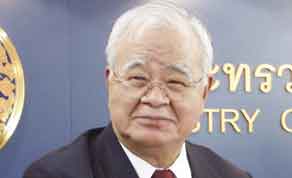
Yonekura: I want the government to move swiftly in its recovery efforts
Hiromasa Yonekura, chairman of the Japan Business Federation, said the influential lobby would not fight the government if it decided to shelve a plan to lower the corporate tax rate, which at around 40% is among the highest in the industrialised world.
Economics Minister Kaoru Yosano suggested last week the government should reconsider the planned tax cut of 5 percentage points from April to prioritise spending on reconstruction and prevent the country’s already massive debt pile from growing.
“I don’t mind if the government skips cutting the corporate tax rate,” Yonekura, who is also chairman of Sumitomo Chemical , told a regular briefing in Tokyo. “Instead, I want the government to move swiftly in its recovery efforts.”
The openness of the business lobby to agree to skip the cut, may be part of a strategy to receive it in full later, analysts said.
“I think Japanese corporations would rather make sure they will get a full 5% cut next year, rather than risk having to be forced to be content with (partial) cut indefinitely,” said Takuji Okubo, chief economist at Societe General in Tokyo.
The government is scrambling to come up with funding for rebuilding after a 9.0-magnitude earthquake and tsunami stuck the northeast coast on March 11, causing an estimated $300bn in damages and crippling a nuclear power plant.
Cutting the corporate tax rate has been seen as key to boosting the competitiveness of Japanese firms, as well as an important pro-business gesture by Japan’s Democratic Party.
The disaster in northern Japan knocked out about 20% of Tokyo Electric Power’s operating thermal and nuclear power generation, prompting rolling blackouts in Tokyo and its neighbouring prefectures which account for 40% of the country’s gross domestic product.
Power outages have forced many companies to close plants or run at low capacity, sending ripples through supply chains.
Yonekura said companies may need to shift production to western Japan, which has not been affected by the quake or rolling blackouts, and suggested firms work together to conserve energy and get through the power crunch.
Possible steps include coordinating production times to reduce usage during peak hours and joint use of power generators among factories operating in the same region, tactics that some analysts think may help Japanese firms keep operating during the summer, when power demand typically peaks.
Okubo said that power saving efforts such as staggered summer vacations and operating on weekends and at night could be enough to prevent blackouts.