Reuters/Riyadh
Saudi Arabia began distributing $37bn in social benefits yesterday to ease the pain of inflation and unemployment in the world’s top oil exporter and avert the popular unrest that has spread across the Arab world.

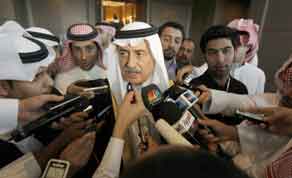
Saudi Arabia’s Finance Minister Ibrahim al-Assaf speaks to reporters at a financial conference in Riyadh yesterday. The country would start implementing new social measures from yesterday, its finance minister said, adding the world’s top oil exporter has felt no economic ill effects from turmoil in other Arab states
The Opec producer has so far escaped the mass protests that have toppled entrenched leaders in Egypt and Tunisia, but the Saudi stock index posted its steepest drop in more than two years amid fears the turmoil could yet reach the kingdom.
“There will be immediate execution (of the king’s measures),” Saudi Finance Minister Ibrahim al-Assaf told reporters. “The ministry of finance transferred the relevant amounts today.”
King Abdullah unveiled benefits for Saudis worth an estimated $37bn after returning home last week from three months of medical treatment abroad.
Al-Assaf earlier told a financial conference the largest Arab economy was stable after regional unrest cast a shadow over investors’ outlook on Gulf markets.
“We have not seen any adverse impact on the Saudi economy,” al-Assaf reiterated.
Saudi stability is of global concern because the key US ally holds more than a fifth of world oil reserves.
Earlier yesterday, Brent crude rose more than a dollar in response to a report in an Egyptian newspaper that Saudi Arabia had sent tanks to Bahrain, but a Saudi official said there was no truth to the story.
Saudi Arabia also faces the delicate task of reassuring markets that it will step in to increase output if prices get out of hand
While surging oil prices boost the country’s revenues, Saudi currency forwards are near their weakest levels in two years. Debt insurance costs have also risen across the Gulf, the world’s top oil exporting area.
The Saudi index in the Arab world’s biggest stock market fell 6.8% in its biggest drop since November 2008 to its lowest close since July 13, 2009.
Part of the king’s handouts will go to new funds to help Saudis to obtain housing loans, a pressing issue for the Gulf Arab state’s growing native population of 18mn. Over 10% of locals are unemployed.
Al-Assaf declined to say when the cabinet would approve a much-delayed mortgage bill to address the housing issue, saying only that the kingdom’s quasi-parliament, the Shoura Council, needed to act first.
Saudi Arabia has been mulling the bill for many years but analysts say it will not be effective unless it addresses the sensitive issue that much of Saudi land is owned by royals.
Al-Assaf also said spending would rise this year following the king’s measures, but it was too early to say by how much. Budget revenue would also increase, he said.
Saudi Arabia plans to draw on its reserves to help fund the new social benefits, he said on Sunday.
Net foreign assets reached a record high of 1.67tn riyals ($445bn) in January, nearly 9% up from the previous year, due mainly to rising oil prices.
Saudi Arabia, a member of the Group of 20 developed and emerging nations, has outlined spending of 580bn riyals for 2011 in its third consecutive record budget, with a conservative revenue estimate of 540bn.
Saudi analysts said the king might also reshuffle his cabinet to bring in new ministers and revive stalled reforms.