Reuters/Doha
Citigroup plans to beef up its operations in Qatar as the US bank seeks to tap into the tiny Gulf Arab state’s rapid economic growth and immense wealth, a top executive said.

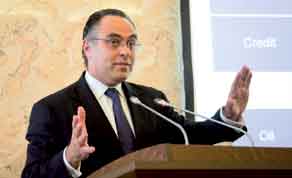
“Qatar is uniquely positioned with the amount of liquidity, to tap opportunities,” says Alberto Verme
Foreign investors have scrambled to set up shop in Qatar—the best performing Gulf Arab stock market in 2010 with a 25% gain—lured by the Gulf state’s growth prospects.
“Qatar is uniquely positioned with the amount of liquidity, to tap opportunities,” said Alberto Verme, Citi’s chief executive for Europe, the Middle East and Africa (EMEA).
He, however, did not specify if the bank plans to hire new employees or open new branches in Qatar.
Verme, a Peruvian national who was previously Citi’s co-head of investment banking, said he expects further developments in local capital markets in the region and forecast sale of Islamic bonds to increase in 2011 and 2012.
“We have seen great interest from investors, as well as issuers. We see more companies in the region using that to diversify their funding source, both local and international,” he said on the sidelines of a conference in Doha. While Verme declined to specify details about the bank’s business in Middle East, the executive said he expected the business to grow.
“When we highlight growth areas in the world, the Middle East is an area where you will see more coming from Citi,” he said.
A steep drop in bond trading revenue pushed Citigroup’s fourth-quarter profit far below expectations in January, casting doubt over chief executive Vikram Pandit’s claim that the bank had “turned the corner.”
Rise in Mideast sukuks seen over next 2 years
Citigroup expects an increase in sukuk, or Islamic bond, issuances in the Middle East this year and next as banks and companies seek to diversify their funding sources, a senior bank executive said yesterday.
Citi’s Europe, Middle East and Africa chief executive officer Alberto Verme said there would be “a lot more sukuks this year and next,” adding that “there is a pipeline coming from [local] financial institutions first.”
“You will probably see more foreign companies operating in the region using this avenue and diversifying their funding source,” Verme told reporters on the sidelines of a conference in Doha. He didn’t say by how much the industry would grow over the next two years.
The fast-growing Islamic finance industry is estimated by some to be worth as much as $1tn.
In November 2009, Citi advised General Electric Capital Corp, a unit of US conglomerate GE, on a benchmark-sized sukuk issue. Verme said the market can expect more issues like this from foreign players in the region.
“For those companies like GE, and if you speak to Exxon, Total and Conoco, they are long-term investors in the region and the sukuk avenue is an avenue that we would recommend any one long-term investor to use,” Verme said.
Emirates Telecommunications Corp, or Etisalat, said in November it would establish $7bn Global Medium Term Note, or GMTN, and $1bn sukuk programs to fund its plan to acquire a stake in Kuwait’s Mobile Telecommunications Co, better known as Zain, for as much as $11.7bn.