


Reuters/
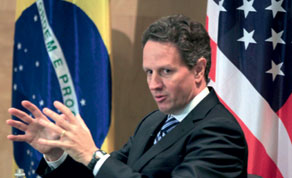
Geithner addresses Brazilian students at Getulio Vargas Foundation in
US Treasury Secretary Timothy Geithner said yesterday

Seeking to cement common ground with
This will aid
“As countries with large surpluses act to strengthen domestic demand in their economies, open their capital markets and allow their currencies to reflect fundamentals, we will see more balance in the flow of capital, less upward pressure on Brazil’s currency, and more robust growth in Brazil’s exports, especially manufacturing exports,” Geithner said at a think-tank in Sao Paulo.
Geithner is making a one-day visit to
After strains in recent years over trade disputes and
Ahead of the February 18-19 meeting of the G20 group of nations in
The undervalued yuan – part of what
Geithner’s comments came three days after the Treasury released a long-delayed report that declined to name
Geithner’s visit is also designed to lay the groundwork for a trip by US President Barack Obama in March, which officials on both sides say will signal a better era of co-operation between the
“
Rousseff, a pragmatic leftist, believes that closing ranks with
“The
Rousseff also wants to work with
Lael Brainard, a US Treasury undersecretary who is accompanying Geithner on the trip, said Brazil and the US share common ground on the G20 commodities agenda and want to keep the focus on improving market functioning.
“The approach that we’ll want to take there is to improve transparency in the commodity markets,” she said. “But it’s with a view to making markets function more effectively as opposed to supplanting markets.”
Rousseff is also reevaluating a large jet fighter deal which
Geithner, who will meet with Finance Minister Guido Mantega and central bank chief Alexandre Tombini, will also aim to discuss shared bilateral goals such as how best to rein in government spending and rebalance global growth.
He said that the
Geithner’s remarks also raised the idea of capital controls as a potential policy tool that could help
“Countries facing an outsized burden of adjustment and overvalued flexible exchange rates may need to adopt carefully designed macro-prudential measures, as a complement to fiscal reforms,” he added.