


Agencies/Tehran
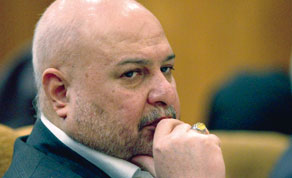
Iranian Oil Minister Massoud Mirkazemi at the news conference in
No Opec country has requested an emergency meeting to discuss the rising price of crude,

“The price of $100 for oil per barrel is real ... Opec does not need to hold an emergency meeting over the price issue,” Massoud Mirkazemi told a news conference.
Brent crude prices rose this week to around $98 a barrel, while
One delegate from a Gulf Opec member state said on Thursday Opec could hold an emergency meeting if oil prices “exceed $100 and stay there”.
“None of the Opec members find $100 concerning or irrational. Some of the Opec members see no need for an emergency meeting even with prices at $110 or $120,” Mirkazemi said.
“None of the members have asked for an emergency meeting and I think for a long time there would be no such request,” Mirkazemi said.
Analysts are divided between those who see fundamental strength, as the world economy recovers, driving up fuel consumption, and those who focus on differences between today’s relatively well-supplied market and that of 2008, when oil prices raced to an all-time high of nearly $150 a barrel.
Meanwhile, , the chief executive of French oil major Total said yesterday that oil prices had risen too high, too quickly, but added that increased Opec output will not stem the rise as the climb is driven by demand.
“The world economy is just recovering,” Christophe de Margerie said ahead of an energy conference in the UAE capital,
“The market is bullish because there is increasing demand in emerging markets ... it (demand) is higher than expected.”
Brent crude rose above $99 a barrel on Friday in
A Reuters poll last week showed
Asked whether Opec should raise production, de Margerie said that may not help curb rising prices.
“It’s difficult because there is no shortage of oil. Today, it is much more determined by the market,” he said, adding: “Too high oil would not be well received by consumers.”
And,
“The price is approaching the fair value of $100 per barrel,” Ramirez said, reiterating the stance of two other Opec members, Libya and Ecuador, which say prices need to be higher to help producing nations maintain output.
Analysts are divided between those who see fundamental strength as the world economy recovers, driving up fuel consumption, and those who focus on differences between today’s relatively well-supplied market and that of 2008, when oil prices raced to an all-time high of nearly $150 a barrel.
Opec often says it will act to address any supply shortages, but not to tackle price rises that it says are caused by speculators. The group’s Secretary General, Abdullah al-Badri, repeated that position on Saturday.
The group has held its supply target steady since a decision in December 2008 to implement a record cut in production levels of 4.2mn barrels per day (bpd) to bolster prices after the global financial crisis.
Ramirez said
“We don’t think it (the price rise) impedes the recovery of the global economy,” he said. “
Ramirez also said
Ramirez said the differential between Brent crude prices and
“We have contracts that are linked to the Brent price. A currency basket for oil transactions is necessary for stability,” he said. “The spread shows the weakness of the dollar, which is a structural problem of the
The spread between the two grades widened to as much as $7.66 this week, the widest premium the
Strength in price, trading volumes and the market structure of Brent crude has helped lure some big investment money that typically favoured
Asked about US appeals that
“We are sovereign,” the minister said. “They cannot dictate to us in this manner.”
President Hugo Chavez’s socialist government has actively sought to promote ties with fellow Opec member
Last month, Venezuelan lawmakers approved the creation of a joint venture between state oil company PDVSA and
Last month, Venezuelan lawmakers approved the creation of a joint venture between state oil company PDVSA and