


By Eric S Margolis /New York
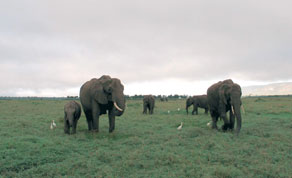
Elephants are one of nature’s supremely beautiful and most majestic creations.

Africa’s elephants are rapidly being slaughtered to extinction because of Asia’s lust for ivory
Africa’s elephants are rapidly being slaughtered to extinction because of Asia’s lust for ivory. We should remember Gandhi’s maxim: “The greatness of a nation and its moral progress can be judged by the way its animals are treated.”
Last week, the New York Times took time off from urging war against Syria and Iran to run a major study on the destruction of Africa’s elephants. Africa once was home to 5-10mn elephants. Only some 600,000 remain, scattered across Africa. They are being rapidly massacred. In 2011, an estimated 4,000 elephants were slaughtered for their ivory.
According to the Times investigation, “Africa is in the midst of an epic elephant slaughter” conducted by bands of poachers and military units from nations, like Uganda and Congo that are financed by the United States.
Elephants are being shot from the air, poisoned, mowed down with automatic weapons. Their terrified babies, who won’t leave their mother’s bodies, usually die within 24 hours of shock and anguish.
A Kenya-based charity, the Sheldrick Trust Wildlife, run by the magnificent Dame Daphne Sheldrick, goes into the bush to rescue orphaned baby elephants and nurse them back to life. Half the orphans still die from shock in spite of intense care. This writer is proud to help their work
(www.sheldrickwildlifetrust.org).
China is believed to account for 70% of ivory imports, followed by Thailand and other Asian markets. Ivory goes for $1,000 per pound in China. Chinese still value ground rhino horns and elephants’ sexual organs as aphrodisiacs, though both have been proven totally ineffective.
Some African nations and international bodies have made extensive efforts to halt the illegal ivory trade and protect elephants. But there’s too much profit in this industrial elephant slaughter by poor African farmers, and the Asian crime syndicates that fuel this trade. Think of North America’s bison that once numbered in the millions, reduced by 1900 to only 1,000 animals.
Elephants are also partly to blame for their plight. As I have seen many times in southern Africa, they are hugely destructive to their habitat, tearing down trees to get at their tender top leaves, and trampling all underfoot. Elephants, the largest animals on earth, are vegetarians. Unlike most humans, they kill no living beings for their food.
Farmers are moving into elephant’s traditional habitat across Africa. So clashes are inevitable as farmers try to protect their crops. This same struggle goes on in India where wild Asian elephants often clash with farmers.
Elephants can also be cranky: I recall running for my life in South Africa as an angry bull chased me. But I’ve also been within feet of herds of wild elephants in Botswana and Angola, and was awed by their dignity, might and tender group care of their little ones.
Is there anything we can do to stop the mass slaughter of elephants? The only answers that come to this writer, who thinks a lot about animal welfare, are: a) ban all hunting of elephants, a despicable practice; b) impose long prison terms and heavy fines on ivory poachers; c) boycott ivory producers.
Those who hunt elephants must face public opprobrium.
Most Chinese and many other Asians have poorly developed or non-existent concerns for animal welfare. The only way to stop their nations from allowing imports of ivory is by selective public boycotts of specific consumer goods, like clothing, chemicals, fish, pharmaceutical products, toys, etc. that they export to the West.
Threats of boycotts by the EU against nations inflicting cruelty on animals, like Canada with its primitive fur and seal trade, have been an excellent start.
Such action must be done by non-governmental organisations. If governments get directly involved, trade wars are likely. Consumer boycotts are the only practical way to inflict sufficient pain on importing nations to halt the odious ivory trade.
So it’s up to Western animal welfare organisations and consumers to halt the butchery in Africa of the noble, highly intelligent elephant. If we fail, our moral progress, to paraphrase Gandhi, will rank below that of the hyena.