


By Ademola Gideon Ilori/Doha
Electricity is an essential part of our lives. However, it has the potential to cause great harm. Electrical systems function almost indefinitely, if properly installed and not overloaded or physically damaged. Electrical fires in homes and workplaces claim the lives of many. Some of these fires are caused by electrical system failures and appliance defects, but most are caused by the misuse and poor maintenance of electrical appliances, incorrectly installed wiring and overloaded circuits and extension cords.

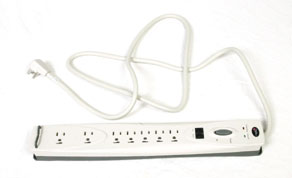
Power extension cords aren’t all the same: they are manufactured to be used in different environments and to carry varying amounts of electrical current. The next time you reach for an extension cord, remember this: just because a particular cord is long enough, does not necessarily mean it is the right one for the job. It can be easy to think that length is the only characteristic that sets one extension cord apart from another, but there’s much more to it than that!
By basing your choice of extension cord on each task’s specific requirements, you can greatly reduce the risks of fire, electrical shock, and injury that come with improper use. To be safe, always buy fused extension cords. It’s also important to look at whether it’s an indoor or outdoor cord and the cord’s wattage, very important.
Fused extensions are always better than non-fused ones. The idea behind a fuse is to prevent electrical fires. If the hot wire (a wire with electricity running through it) were to accidentally touch the neutral wire for some reason (say, because a mouse chews through the insulation, someone drives a nail through the wire while hanging a picture, or the vacuum cleaner sucks up an outlet cord and cuts it), an incredible amount of current will flow through the circuit and start heating it up like one of the coils in a toaster, until it bursts into flames. The fuse heats up faster than the wire and will burn out before the rest of the cord gets hot enough to catch fire. This breaks the cord, and stops the current of electricity running through it before a fire can start.
Extension cords are classified for either indoor or outdoor use. The insulation, or jacket, of an outdoor-rated extension cord is made of a tougher material, which is designed to withstand temperature changes, moisture, UV rays, and sometimes chemicals. While it’s okay to use an outdoor power cord indoors, never use an indoor-rated extension cord for an outdoor task. Doing so could cause electric shock or create a fire hazard.
Every electrical cord, extension or otherwise, contains an inner metal conducting wire, which carries electrical current from one end to the other. The thickness of this conductor is referred to as its gauge. Gauge is indicated by a number; the lower the number, the thicker the wire is. A wire’s thickness directly affects the amount of current (or wattage) it can carry over a certain distance.
The number of watts an extension cord can safely transmit (given its length and gauge) is known as a wattage rating. Before plugging an appliance or power tool into an extension cord like an electrical kettle, vacuum cleaner or a hair dryer, it’s extremely important to be sure that the power demand (or pull) of that device doesn’t exceed the cord’s wattage rating.
On the same note, if you’ll be powering multiple devices from one extension cord, add their energy requirements together and make sure that the total isn’t higher than the wattage rating for that cord. Never use an extension cord to supply more wattage than it’s rated for, because overheating and fire may occur.
How to determine a device’s power requirements
It isn’t difficult to find out how much electricity is required to run different devices. For the most part, you won’t need to do more than consult the manufacturer’s instructions. Another good place to look for wattage specification is the tags that are often attached to a device’s power cord. And if all else fails a quick call to the store where you bought the product should clear up any questions.
In some cases, you may find that wattage requirements are listed in amps and volts instead. For these situations, there’s a simple formula that can help you calculate electricity requirements: just multiply the number of amps by the number of volts, the resulting number equals that appliance’s wattage. Here’s an example: if a device uses 3 amps at 250 volts, that translates into 750W (3 x 250 = 750) or 5 amps at 250 volts, that translates into 1250W (5 x 250 = 1250).
A few things to know before you plug in
l For your protection, power cord labels are printed with handy product specs that tell you the cord’s length, size (wire gauge), wattage, and proper usage environment. So before you unwind that cord and hook it up to a power tool, read the label, checking only takes a few seconds, but it might just save you and your family from injury or property damage!
l When shopping for extension cords, only purchase those fused and labeled for their wattage. The presence of these tells you that samples of that particular type of cord have been tested and received consumer safety approval.
l Don’t use extension cords with cut or damaged insulation. Exposed conducting wires put you at risk for fire, burns and electric shock.
lDo not cut, file, or otherwise alter an extension cord’s grounding pin or plug blades to make it easier to plug into an outlet! If the extension cord plug doesn’t fit into an older outlet, have an electrician replace the outlet.
l Extended exposure to outdoor conditions can cause cords to deteriorate. Whether they’re rated for indoors or outdoors, store all extension cords inside when they’re not in use.
l Regardless of whether or not it’s being used, as long as a power extension cord is plugged into an outlet, it’s conducting electricity. To avoid potential safety hazards, always remember to turn off the sockets at the wall if they have a switch, and unplug extension cords when they’re not in use.
If your electrical extension cord can accommodate multiple plugs but not all outlets are being used, block unused openings with outlet covers to prevent injury to children and pets.
Some indoor and outdoor safety tips to remember
l Never use any extension cord, but a properly fused one to protect a circuit.
l Find and correct overloaded circuits.
lNever place extension cords under rugs.
l Ademola Gideon Ilori is an advisor to Qatar’s Traffic Department