


By Kamran Rehmat/Islamabad
Siachen translates into “place of wild roses”. In Balti language, the word means “an abundance of black roses.”

Mountain madness: Every second day an Indian soldier dies, and every third, a Pakistani - mostly as a result of freezing weather. Both sides agree the theatre is absurd but will not cede an inch
Regardless of their colour and propensity, the roses here only serve to remind every soldier, who has the misfortune of going up 20,000ft to defend the rather cold “motherland”, it could be his turn next to have one placed at his graveside.
The Pakistan Army camp near the Siachen Glacier was buried under snow after the largest avalanche known to history - about a square mile across - swept over it on April 7, burying 124 soldiers and 11 civilians under it.
It has tellingly brought to the fore the forgotten frozen frontiers into the limelight, sparking an intense debate about the devastating consequences of two nuclear-armed nations locked in a deadly conflict, but where more soldiers perish confronting the weather than actual combat.
The accident that wiped out the battalion headquarters of the Northern Light Infantry 6 is one thing but the figures that pertain to staging the world’s highest battlefield are so startling you wonder at the sheer audacity of the destruction - the loss of precious lives, waste of material resources and colossal damage to the environment.
In 2007, Indian Air Marshal (retd) Nanda Harappa advised India and Pakistan to call off their absurd high-altitude confrontation, where he said Indian troops took 80% of their casualties from weather and the human waste and war detritus produced by the two armies polluted crevasses and gullies that provide 70% of the water used in India and Pakistan.
More than 8,000 Indian and Pakistani troops have died since April 1984 in a bloody conflict over the possession of the geographically remote and climatically inhospitable area, where General Ziaul Haq, the then-military ruler, famously said not even a “blade of grass grows”.
Safe estimates by defence analysts reveal Pakistan spends approximately, Rs15mn a day to maintain three battalions at the Siachen Glacier, which round up to Rs5.4bn a year. The deployment of seven battalions at the Glacier costs India Rs50mn a day - Rs30bn a year.
These experts say, one Pakistani soldier is killed every third day; approximately, 100 casualties every year on average. One the other hand, one Indian soldier is killed every other day, which round up to 180 casualties yearly.
According to unofficial figures, more than 3,000 Pakistani soldiers have lost their lives on the bloody glacier since April 1984 against over 5,000 Indian casualties. Currently, there are approximately 7,000 Indian Army troops and about 4,000 Pakistani troops stationed here.
Significantly, more deaths result from the extreme weather than military might. At 10,000 to 14,000ft feet of fatigue and increased sleepiness emerge; however, at heights above 15,000ft clear psychiatric morbidity is reflected in depression, anxiety, paranoia, hostile behaviour and obsessive compulsiveness.
Visual and auditory hallucinatory experiences are related to climbing at altitudes above 18,000ft, according to another study. Acute Medical Sickness is the most common sickness associated with high altitudes and results in headaches, nausea and insomnia, symptoms that may again be related to psychological triggers.
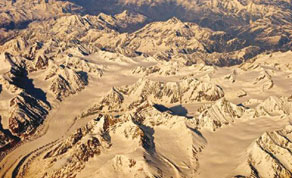
The normal temperature hovers around -40°C. If bare skin touches metal, it binds as if with glue and can be torn off. In winters, strong winds from Central Asia can further bring down the temperature to -50°C. The glacier receives 6-7m of the annual total of 10m of snow in winter alone. Snowstorms can reach speeds up to 150 knots.
The battle for Siachen Glacier involves territory claimed by both Pakistan and India but not controlled by either until the mid-1980s. It is a war neither side wants to fight and yet has lasted almost three decades now.
One of salient features of this maddening engagement is that both India and Pakistan have successfully kept it out of the media! If not for the April 7 tragedy, it’s a cinch the cold deaths and destruction would remain out of the public eye.
Even though few are betting on change anytime soon, at least questions are being raised openly and a certain pressure building. It certainly moved the US to step in with an offer to help India and Pakistan resolve the issue given neither side would willingly concede an inch.
Predictably, the offer was ignored.
India has three passes under its control and Pakistan just one. The glacier is under stress due to rising temperature in the area. There are three airfields on the Indian side of the glacier and burning of fuels is contributing towards a spike in temperature.
The chemical blasting of mountains to make camps is hazardous for the glacier, whose total mass has dwindled considerably during the last two decades. In 2001, India laid down kerosene oil pipelines on its side of the glacier, further damaging the environment.
However Vikram Sood, a former chief of India’s Research and Analysis wing, does not buy the sentiment for leaving the glacier alone. Says he: “The Indian Army climbed to the Saltoro Ridge in 1984 to cut off Pakistan’s plans (sic) to access beyond Saltoro to the Karakoram Pass. This would have enabled Pakistan access to Tibet and also threaten Ladakh. Pakistan and China would have access to each other through the Khunjerab Pass on the Karakoram Highway via Xinjiang and to Tibet through the Karakoram Pass. The Saltoro Ridge provided Indian forces with strategic heights looking into… (Pakistan’s) Gilgit and Baltistan. Such an advantage must not be given up for some obscure short-term political gain without a document to establish one’s credentials.”
So are there any workable solutions? The Antarctic treaty is one, where neither side need relinquish sovereignty when they place their claims for the higher purpose of science. To be sure, technology now exists for monitoring any potential violations of treaties and accords through remote sensing, obviating the need for physical presence of troops.
As Saleem H Ali, a professor of environmental studies at the University of Vermont, a National Geographic Emerging Explorer for 2010 and author of Treasures of the Earth: Need, Greed and a Sustainable Future, says:
“The only people who would genuinely like to visit Siachen are environmental scientists and mountaineers. Creating a zone of visitation from both sides of the border to the Siachen region for scientists and mountaineers and equally sharing any economic revenues from such activity would be a means of operationalising the resolution of the conflict.”
l The writer is a freelance journalist based in Islamabad and can be reached at [email protected]