


 |
|
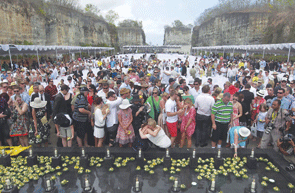
Australian relatives of victims of the 2002 Bali bomb attack comfort each other as they attend |
On October 12, 2002, suicide bombers attacked two packed nightspots on the holiday island, pitching Indonesia into a battle with militancy and dealing a morale-sapping blow to Australia, which lost 88 people.
Mourners gathered in Bali shaded themselves under Australian flags as they listened solemnly to a mournful roll call of the dead, some crying or leaning on loved ones’ shoulders as they observed a minute’s silence.
Families of the Australian victims, many of whom were youthful holidaymakers and members of touring sports teams, made the journey to Bali seeking closure to a painful decade.
“I lost my two daughters in the Bali bombing,” said Danny Hanley, father of victims Renae and Simone—the youngest died from her injuries several weeks later in a Perth hospital to become the 88th Australian to perish.
“As we go forward into this new decade year, let us go out with the patient power of knowledge that our God will go with us,” he added. The strike by the Al Qaeda-linked group Jemaah Islamiyah (JI), which also left scores of people with horrific burn wounds, came one year after the 9/11 attacks on the US.
The ceremony was held under the watch of 2,000 police and military personnel, including snipers, after Indonesia issued its top alert due to a “credible” terror threat in Bali.
Under sunny skies, the event in a large cultural park heard moving tributes from families of the victims, who died as the bombers devastated the Sari Club and Paddy’s Bar on Bali’s party strip in Kuta.
Choking back tears Australian Victor Parkinson, who lost his cousin Donna in the blasts, said the ceremony did justice to the victims, adding that nothing would replace the loss of a relative who was “more like a sister” to him.
“But I’ve now got a place I can come and visit all the time. I know where she is, she loved Bali... and I don’t blame the Bali people, not at all.”
Speaking at the event, Australian Prime Minister Julia Gillard recognised the terrible legacy of the attacks, saying “wounds and scars abound, healed and unhealed, but nothing can replace the empty seat at your table”.
But she also praised the resilience of her people and said Indonesia and Australia, which are sometimes edgy neighbours, “drew closer” than ever before.
Indonesia, which has the world’s biggest Muslim population, won praise for its law-enforcement actions after the bombings, and was also lauded for its response after subsequent attacks in 2005 in which 20 people were killed on the island.
In the 10 years since the 2002 attacks, all of the leading Bali perpetrators have either been executed, killed by police in raids or jailed. Delivering remarks to the thousand-strong crowd of mourners, Indonesian Foreign Minister Marty Natalegawa said his country remained committed to fighting extremism so that “humanity prevails over hatred”.
Thirty-eight of those killed were from Indonesia, which was stunned by the atrocity on Bali, whose scenic resorts, five-star hotels and backpacker hostels are a vital cog of the country’s tourism engine.
“I feel sensitive and am easily sad. It’s a feeling that always comes when I’m alone, that’s when I shed my tears,” said Ni Luh Erniati, whose husband worked at the Sari Club and was killed.
Bali’s fortunes bounced back after a massive slump in tourist numbers following the attack, and the deadly bombing in 2005, with record numbers of Australians now returning to its beaches.
Many Australians felt the 2002 bombing had singled them out for attack, and emotionally charged remembrance ceremonies also took place across the country yesterday.
Gillard, who after the ceremony visited a hospital which treated hundreds of the Bali wounded, was expected to stay overnight on the island.
Despite its counter-terror successes since Bali, including crippling the JI network, Indonesia still harbours extremist pockets intent on violence.
Speaking in Solo City, Central Java, Joko Tri Harmanto, who served six years in jail for hiding a slain Bali bomb mastermind, delivered a very different anniversary message.
“I ask fellow Muslims to be calm and patient for the time being... basically we will continue Jihad but I hope that its implementation will be more proper,” he said. AFP