


AFP/Tokyo
Workers at Japan’s crippled Fukushima Daiichi nuclear power plant removed nuclear fuel yesterday for t
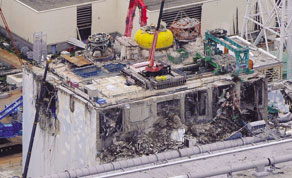
he first time since last year’s tsunami-sparked crisis, media said. Television footage showed dozens of operatives, all wearing white protection suits, atop the heavily damaged building at unit No 4, extracting a fuel rod with a crane.

Workers remove fuel from the crippled Fukushima Daiichi nuclear power plant reactor building number 4 yesterday
The plant’s operator, Tokyo Electric Power Co (Tepco) said earlier the operation was planned for some time this month. The company said two rods, each measuring around four metres, are to be taken out of the fuel pool.
Yesterday’s operation was the first time Tepco has been able to remove any nuclear material since disaster struck at the plant in March 2011.
Reactors No 1, 2 and 3 all melted down, but reactor No. 4 was empty when the tsunami crashed ashore. However, a disabled cooling system led to the fuel pool—where both used and unused fuel was kept—boiling.
That resulted in an explosion after a build up of hydrogen inside the reactor building. “The company will examine the extent of corrosion on the fuel rods, which may have been caused by the sea water that workers had to use to keep the temperature down,” a company spokeswoman said, without confirming the operation took place yesterday “for nuclear security reasons”.
Television crews used helicopters to film the operation, defying requests from Tepco. More than 1,300 used fuel rods and over 200 unused ones were in the water pool at unit No 4 when the tsunami hit, the spokeswoman said.
Japan is to restart its second nuclear reactor after the Fukushima crisis closed the nation’s atomic power plants, even as fresh concerns surfaced about the unit’s positioning near a faultline.
The Ohi No 4 reactor, 370km west of Tokyo is scheduled to be restarted according to the operator, Kansai Electric Power Co. It is expected to reach full criticality by 6am today.
The No 3 reactor at the station was reactivated earlier this month, to help avert possible power shortages.
All 50 reactors operating in the country were taken off line for maintenance and tests after the March 11 disaster.
The Nuclear and Industrial Safety Agency (NISA) said it would order a reassessment of geological data after seismologists said there were potentially active faults under Ohi and the nearby Shika station, operated by Hokuriku Electric Power Co.
The assessments will not prevent the restart of Ohi reactor No 4, Jiji news agency reported, citing vice-trade and industry minister Seishu Makino.
The restarts have prompted street protests, with more than 100,000 people pouring through central Tokyo on Monday to denounce atomic energy.
The future of nuclear power poses serious problems for Prime Minister Yoshihiko Noda ahead of an election that could come later this year, threatening to further dent his declining support and fracture his Democratic Party of Japan (DPJ), already divided over a plan to double the sales tax.
One day after Monday’s anti-nuclear rally, three members of parliament’s upper house left the DPJ, citing opposition to the reactor restarts.
Opposition parties already control the upper house, which can block bills. The defections further weaken Noda’s hand in talks with rival parties, which are pushing for a snap election.
In response to public criticism, the government on Tuesday said it would ban employees of electric utilities from speaking at public hearings being held around Japan on producing a post-Fukushima energy policy.
A spokesman for Kansai Electric said the company had received no order from Nisa, but was ready to carry out a reassessment on Ohi if necessary.
Hokuriku Electric said in a statement on Tuesday that it stood by its findings that the fault line below the 19-year-old Shika reactor was inactive.
Nisa said in April it was concerned about an active fault under the Tsuruga nuclear plant not far from Shika and operated by unlisted Japan Atomic Power Co.
A spokesman for Nisa said Kepco had to re-examine the Earth’s crust underneath Oi, while the operator of the Shika plant in nearby Ishikawa also had to carry out further studies.