


 |
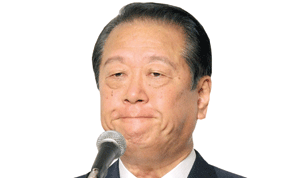
Ichiro Ozawa, 69, once dubbed the “shadow shogun”, was cleared by the Tokyo district court of allegations he conspired with aides to hide 400mn yen ($4.9mn) he lent to his political funding body in 2004 for a land deal.
His aides had said the mistake was purely technical and their boss — a former Democratic Party of Japan (DPJ) leader who engineered the party’s 2009 election victory — had not been aware of it.
Prosecutors, who came unstuck over the use of illegal evidence, said it was “unthinkable” Ozawa had not been in the loop.
Major TV networks cleared their schedules to report the verdict, with a huge media presence at the court for a case that has gripped Japan’s political classes for years.
A spokesman for the court said 1,843 people queued up for the 46 seats available to the public.
According to NHK, presiding Judge Fumio Daizen told the court: “It has been decided that he is innocent because there is no evidence proving his conspiracy.”
In a brief statement after the hearing, Ozawa said: “The court ruling is in line with my assertion that there was no conspiracy related to a false statement.
“I pay my respects to the court for showing its common sense and fairness, and I am grateful for people who have supported me.”
Ozawa is the head of the largest grouping in the DPJ, and often seen as the power behind the premiership. In the highly factionalised world of Japanese politics, very little gets done without his say-so, tacit or otherwise.
While a conviction and the ensuing incarceration would almost certainly have sunk him, yesterday’s verdict clears the way for Ozawa to confront Prime Minister Yoshihiko Noda over controversial plans to double sales tax by 2015.
Years of unsuccessful pump-priming aimed at kickstarting Japan’s moribund economy have left it with debts equivalent to twice its GDP.
Mainstream media, academics and international organisations say the hike is the most sensible solution to the fiscal shortfall, albeit a partial one.
But Ozawa, whose ability to take the public pulse is begrudgingly admired, has set his faction — which makes up around a third of the DPJ — firmly against the move.
However, Kenji Yamaoka, a DPJ lawmaker close to Ozawa, ruled out any immediate head-on clash with the party leadership.
“We are not seeking confrontation blindly. We are not thinking about a power struggle in the party,” Yamaoka told the private TBS network. But he noted the Ozawa group was aware of the “promises we made to the people and how we will realise them”. The party can change but “should not forget its starting point”, he said.