


 |
|
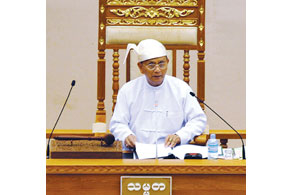
Myanmar President Thein Sein addresses the Union Parliament in Naypyidaw yesterday. The Union Parliament - which combines members of the upper house (national parliament) and the lower house (people’s parliament) - convened yesterday for its second session since a controversial election in November 2010 in the country’s remote capital |
“We have been trying to stand tall among international and regional organisations as a dutiful member of the world family,” President Thein Sein said in a speech at the opening of a new session of parliament.
“We are ready to cooperate with the international community,” he said, adding that the new government was working for “citizen rights”.
A civilian administration is now nominally in charge of Myanmar following a controversial November election, but its ranks are dominated by former generals.
Thein Sein’s government has set its sights on being allowed to hold the chairmanship of the Association of Southeast Asian Nations (Asean) in 2014 - a year before the country’s next scheduled polls.
The regime appears to have softened its stance against its opponents in recent weeks, although more concrete reforms from the new regime - such as the release of political prisoners - remain elusive.
On Friday, Thein Sein met opposition leader Aung San Suu Kyi for the first in the highest level dialogue between the Nobel laureate and the authorities since her release from house arrest in November, days after the election.
The new government has also called for peace talks with ethnic rebels and is allowing UN rights envoy Tomas Ojea Quintana to visit this week for the first time in more than a year. Quintana is expected to meet senior government figures including the labour and defence ministers.
The envoy has been a vocal critic of Myanmar’s rulers, enraging the generals after his last trip by suggesting that human rights violations in the country may amount to crimes against humanity and could warrant a UN inquiry.
Western nations that impose sanctions on Myanmar have called for a number of reforms including the release of around 2,000 political prisoners and an end to rights abuses, particularly against ethnic minorities. AFP