


 |
|
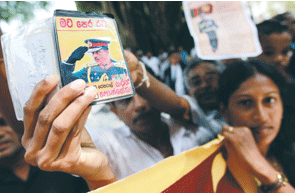
A supporter of former army chief Sarath Fonseka holds up a picture of Fonseka outside the high court in Colombo yesterday |
The Colombo High Court granted Sarath Fonseka bail in a case in which he is charged with harbouring 12 army deserters.
However, Fonseka would only be released if he receives a presidential pardon because he has been convicted in two other cases.
Fonseka’s detention began in February 2010, two weeks after his unsuccessful presidential run. He is currently serving a 30-month jail term and was sentenced to another three years in another case.
Rajapakse on Wednesday assured Fonseka’s wife, Anoma Fonseka, that her husband would be released shortly but he did not give a date for the release.
The bail conditions include a deposit of Rs1mn ($7,600), two sureties of Rs2.5mn each and a ban on travel overseas.
Fonseka’s release was expected as Sri Lanka prepared to mark the third anniversary today of the end of the conflict with ethnic Tamil rebels, whose deafeat Fonseka spearheaded. He then had a falling-out with Rajapakse and ran against him.
He has been convicted of engaging in politics while serving in the army, awarding military contracts to a company owned by his son-in-law and making a false statement implicating the army in war crimes.
On Thursday, Sri Lanka’s cabinet formally backed Rajapakse’s move to free the ailing Fonseka, a proposal seen as a bid to quell criticism of the government and its human rights record.
The president will order the release of his jailed rival this week, sources close to him had told Reuters earlier on Thursday.
Fonseka, revered as a hero by many for helping end the 25-year civil war against the Tamil Tiger rebels, was detained in February 2010 after challenging Rajapakse for president and was later stripped of his rank.
“President got the approval of the cabinet of ministers to release Sarath Fonseka,” the president’s spokesman, Bandula Jayasekara, told Reuters.
Fonseka leads the Democratic National Alliance, which has seven seats in a 225-member legislature, and some legislators from other opposition parties have said they are ready to back him due to his popularity and outspoken criticism against Rajapakse.
He trailed Rajapakse by 17 points in the last presidential election and with the next one not due until 2016, he is not seen as an immediate political threat. His health has deteriorated in prison, increasing pressure on Rajapakse to release him.
Fonseka is being treated in hospital for respiratory problems stemming from a 2006 assassination attempt by a Tamil Tiger rebel suicide bomber.
The United States has long called for the release of Fonseka, whom it calls a political prisoner. The timing of the planned release coincides with a visit by Sri Lanka’s foreign minister to Washington.
Fonseka and the president’s brother, defence secretary Gotabaya Rajapakse, led the army to victory in the final stages of the war, but they fell out after the war ended. The general complained he was sidelined by the president, who grew concerned Fonseka was plotting a coup.
The career infantry officer was prosecuted for an interview he gave to the Sunday Leader newspaper in December 2009 in which he said he was informed that Gotabaya Rajapakse ordered troops to kill surrendering rebel leaders.
A US-backed resolution at the UN Human Rights Council last month urged Sri Lanka to investigate alleged abuses during the last months of the war. DPA