


 |
|
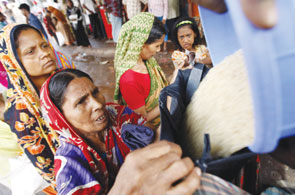
A Bangladeshi woman from a lower income group buys rice from an Open Market Sales (OMS), a shop selling goods at a subsidised price, in Panthapath, Dhaka yesterday. Reports state that food security has been a top priority in the new budget as Finance Minister A M A Muhith has stated |
Finance Minister A M A Muhith unveiled on late Thursday the 1.635trn taka budget for the fiscal year, which starts July 1, projecting a 26% rise in spending but warning “unpopular decisions” might be needed in the months ahead.
Muhith said 7% growth would be achieved through major spending boosts for energy and infrastructure - areas long seen as drags on the economy - which would help attract more foreign direct investment.
“We will be able to achieve 7% real GDP growth next year which can be increased to 8% in 2014-15,” Muhith told parliament.
“We are also putting in much effort to rein in inflation to keep it within a tolerable limit of 7.5%,” he said, adding the government was taking steps to keep prices at a “reasonable level” to protect the very poor.
The South Asian country’s economy grew 6.66% in the last financial year, according to official figures, driven by a 42% expansion in export earnings and gains in the agricultural sector owing to favourable weather.
Some experts have warned, however, that the ambitious growth target will be difficult to attain given the country’s shaky economic situation.
Inflation has soared to a 31-month high of 10.67% and foreign currency reserves are drying up fast as import costs and the fuel subsidies bill soars.
“For the first time in many years our macroeconomic situation is under huge strain,” former International Monetary Fund senior official Ahsan H. Mansur told AFP.
“The country has come to a point where it can no longer afford this ever-expanding subsidy bill, which could hit $4bn in the new fiscal year. The days of a free lunch should be over,” he said.
Muhith warned that “tough” decisions including cutting the country’s generous fuel and fertiliser subsidies, raising taxes and hiking interest rates might be needed to cope with any spike in world oil prices.
“We all should be prepared to face the impact of oil price hikes. We may have to take some unpopular decisions,” he said, adding austerity measures would be introduced if needed.
He said the government would step up its efforts to increase foreign investment and find short-term foreign loans to improve the balance of payments situation, which the IMF has warned is increasingly precarious.
In a confidential April report, a copy of which was obtained by AFP, the IMF warned Bangladesh was “highly vulnerable to external shocks” and said using foreign currency reserves to cover fuel import costs was unsustainable.