


 |
|
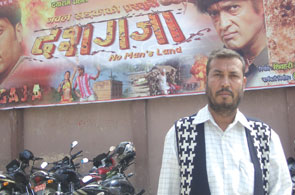
Nepali director Dayaram Dahal’s newly released film “Dasgaja” whips up anti-India feelings with the projection of Indian atrocities, especially in Nepal’s border areas |
This is the plot of a Nepali film. An Indian police inspector strolls into the office of a Nepali team sent to inspect the 1,800km border and holds out the familiar black brief case filled with money. “Take this for your daughter’s education and leave the border inspection to us,” he tells the head of the Nepali survey team.
“You know that you can’t do a thing without our approval. You can’t even appoint a priest in your own temple without our endorsement.”
A young Nepali working as a waiter in a restaurant in India is slapped and abused by a customer when he accidentally spills water on her. The owner of the shop rallies behind the customer and both drag the nationality of the waiter into the abuse. It makes the man chuck his job and the other outraged Nepali employees too leave in a show of solidarity.
These and other images, where Nepal’s bigger neighbour India emerges as a scheming, bullying villain, have begun to circulate through Kathmandu valley where at least three theatres are screening Dasgaja, the Nepali take on border disputes with India.
Gaja is a land measurement unit, meaning nine sq ft. Dasgaja, literally, is the no man’s land, the 90sq ft area that, as per international conventions, has to be left vacant on each side of an international border. The film depicts the atrocities perpetrated by Indian border security forces on Nepalis and shows the hero and his band of armed men reclaiming Nepali land by removing the border pillar wrongly erected by India in connivance with corrupt Nepali ministers.
While many of the scenes are steeped in melodrama, there is however no denying some of the bitter truths sown in the tale scripted by director Dayaram Dahal that have been souring relations between the two
neighbours.
“Nepal’s border districts have a roti-beti relationship with India,” says Dahal.
“People go to India for jobs and marry their sons and daughters to families across the border. However, due to the open border we share, there are now growing problems on both sides. We are asking the authorities to resolve them at a diplomatic level or else it could spill into violence
one day.”
According to Nepali organisations, there are border disputes with India in 62 of Nepal’s 75
districts.
There are also mounting allegations of India’s border security patrols entering Nepali territory and assaulting villagers. Nepali workers returning home from India are frequently fleeced by them.
“There are similar complaints by Indians too,” Dahal concedes. “So we are asking the authorities of both countries to take note of the problems or declare there are no problems.”
A deep problem does exist but neither side is ready to
acknowledge that.
In 2008, India’s then external affairs minister Pranab Mukherjee visited Nepal and said 98% of work on delineating a new border had been completed. The new strip maps were to have been formally signed by both sides “very soon”.
Last year, when Mukherjee’s successor S M Krishna visited Kathmandu, there had been no progress.
Not just the border maps, other bilateral pacts like signing a revised extradition treaty have also been lying on the backburner for years. IANS