Bangladesh has ordered a probe into the slump on the Dhaka Stock Exchange and unveiled a series of reforms to restore confidence in the market.

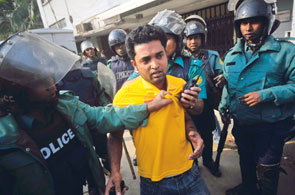
The stock exchange meltdown led to violent protests in Dhaka last week
The move follows the index’s 30% fall since it hit a historic high of 8,918.51 on December 5, with the crisis being blamed on overheated valuations and poor regulation.
The huge falls triggered violent protests by small investors, many of whom have lost savings, and prompting the government to admit regulators had made mistakes in handling the issue.
Finance minister A M A Muhith told a crowded news conference on Sunday night that trading, suspended since Thursday, would resume on Tuesday.
He added that a new circuit-breaker that automatically halts trading and has been blamed by some experts for triggering panic among investors, would no longer be used.
“A high-powered committee will be formed in 15 days to investigate the stock market crash. We can find out what actually happened because now we have all the data and information about day-to-day trading,” he said.
The minister said the government decided to make changes to the functioning and regulation of the index as part of a package of reforms to prevent similar heavy losses in the future and crack down on market
manipulation.
The market regulator, the Securities and Exchange Commission (SEC), has suspended “book building” - a method to value companies before an initial public offering - because of suspected abuses of the process.
The SEC will add a central bank representative to its main decision-making body and “ad hoc interventions” will be abandoned, allowing the market to operate more freely, he said.
Share trading in two companies suspected of financial impropriety in recent listings, Mobil Jamuna and M I Cement, has also been suspended until an investigation is complete.
“I hope following these reform measures the market will stabilise once trading starts on Tuesday,” he said.
The SEC late on Thursday also banned six brokerage houses from trading for one month, including the securities arms of three Dhaka-based private banks.
Bangladesh experienced its first stock market slump in 1996 when the present Awami League government was in power for its first term. A repeat of such huge losses during the AL’s second term has increased pressure on the government.
Dhaka is concerned over the fallout from the market losses because during the previous slump around 50,000 people were affected but the nation now has 3.3mn investors, about 80% of whom are small traders. AFP