


AFP/Islamabad
Pakistan’s problematic relationship with the United States sailed into fresh controversy yesterday as US lawmakers warned of aid cuts after the jailing of a surgeon who helped the CIA hunt down Osama bin Laden.

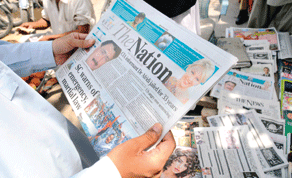
Pakistani newspapers carry front page news of the conviction of Dr Shakeel Afridi, a Pakistani doctor accused of helping the United States find former Al Qaeda leader Osama bin Laden, in Peshawar, yesterday
Shakeel Afridi was found guilty of treason, sentenced to 33 years in prison and fined Rs320,000 ($3,500) under an archaic tribal justice system that has governed Pakistan’s semi-autonomous tribal belt since British rule.
His sentencing was announced two days after Barack Obama appeared to snub Pakistani President Asif Ali Zardari at a Nato summit in Chicago over Islamabad’s refusal to lift a six-month blockade on Nato transit rights into Afghanistan.
Afridi was not entitled to a lawyer but was given a chance to defend himself and has a right to appeal the verdict, officials said.
Critics said he should not have been tried under tribal law for an alleged crime that took place outside the tribal belt, in the town of Abbottabad where he ran a fake vaccination programme designed to collect bin Laden family DNA.
The US government said Pakistan had no basis to hold Afridi, whom an official at Peshawar central jail said was in poor health and being kept away from other prisoners to avoid any danger to his life.
“Anyone who supported the United States in finding Osama bin Laden was not working against Pakistan, they were working against Al Qaeda,” Pentagon press secretary George Little told reporters.
Senators Carl Levin and John McCain, from the two major parties on the Senate Armed Services Committee, demanded Afridi be pardoned and freed “immediately”, saying the decision could put US financial assistance at risk.
“What Dr Afridi did is the furthest thing from treason. It was a courageous, heroic and patriotic act which helped to locate the most wanted terrorist in the world — a mass murderer who had the blood of many innocent Pakistanis on his hands,” they said.
The United States has given Pakistan more than $18bn in assistance since the September 11, 2001 attacks, but US officials have persistent concerns that some elements of the establishment have maintained support for extremists.
Pakistan was tight lipped about the threatened cuts.
“We respect their legislative process but obviously the case of Doctor Shakeel Afridi will be decided in accordance with Pakistani laws and by the Pakistan courts,” foreign ministry spokesman Moazzam Ahmad Khan said.
Pakistani-US relations went into free fall last year, starting when a CIA contractor shot dead two Pakistanis, then over the American raid that killed bin Laden on May 2 and lastly over US air strikes that killed 24 Pakistani soldiers in November.
After the air strikes, Pakistan shut its Afghan border to Nato supplies and ordered US staff out of an air base reportedly used as a hub for drones.
Jailed doctor ‘in bad health’
The Pakistani doctor sentenced to 33 years for treason after being recruited by the CIA to help find Osama bin Laden is in poor health, a jail official said yesterday.
“His health condition is bad, a team of doctors will examine him in jail today,” Samad Khan said from the central prison in the northwestern city of Peshawar, where officials have said Shakeel Afridi is being held.
“He has been kept away from other prisoners to avert any danger to his life,” Khan said, without elaborating further on Afridi’s condition.
On Wednesday, officials announced that the surgeon had been convicted and jailed for 33 years under the archaic tribal justice system that has governed Pakistan’s semi-autonomous tribal belt since British colonial rule.