


 |
|
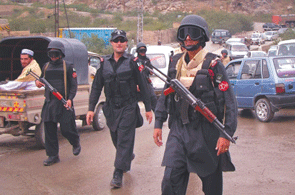
Armed paramilitary soldiers patrol a checkpoint between Bara and Landikotal, in northwest Pakistan, yesterday. Families continued to evacuate Bara yesterday as the army geared up for an operation against militants in the Khyber tribal region, local media reported |
Reliable sources said yesterday that in their separate reports the two agencies had requested the prime minister and the cabinet division to intervene and persuade the provincial political leadership not to waste gains achieved through conversion of B-areas into A-areas.
The crux of the reports was that the rolling back of police force in most areas had encouraged the militant outfits, including the Taliban, to re-organise themselves, taking advantage of loose policing by the Levies which did not have the required training and the will to address such challenges.
But, the sources said, the Prime Minister Secretariat was against interfering in provincial matters because it would be against the 18th Amendment which granted autonomy to provinces.
During the days of Gen (retd) Pervez Musharraf the cabinet offered a
Rs5.5bn package under which all B-areas in the province policed at the time by Levies - constituting about 95% of the province were converted into A-areas where police force was empowered to maintain law and order and 243 police stations were set up.
The sources said that after the 18th Amendment that empowered the federating units to become responsible for internal law and order, the provincial cabinet led by Chief Minister Nawab Aslam Raisani, overturned the decision of transforming B-areas into A-areas and withdrew police force from these 243 police stations.
Instead, the provincial cabinet revived the Levies force, a majority of whom had already been merged into police.
The sources said more than half of the allocated funds had already been used for the construction of police stations, many of them yet to be completed. The completed structures had since been handed over to the Levies and other provincial government departments.
The conversion of B-areas into A-areas was based on the premise that ground realities had changed owing to higher population and increased activities of subversive elements supported by certain foreign hands, making it practically impossible for Levies who had been raised and managed in most of the cases by local Sardars and Nawabs to investigate such situations without proper knowledge of relevant laws to register cases and prosecute criminals.
Informed sources said that Inspector General of Police in Balochistan had also reported to the federal government about a growing unease among police officers who were expecting promotions and fresh postings in newly-created police stations.
In one of his reports, the provincial police chief is reported to have stated that the provincial cabinet did not have the powers even under the 18th Amendment to undo a decision of the federal cabinet and it would be advisable for the federal government to revisit the entire situation in the light of ground realities.