


 |
The Independent Election Commission (IEC) made the ruling this week but it has so far failed to calm the long-running storm over alleged vote fraud in last September’s parliamentary elections.
Its decision was rejected on Wednesday in a vote by the lower house of parliament, the Wolesi Jirga, and prompted hundreds of angry protesters to take to the streets on Tuesday.
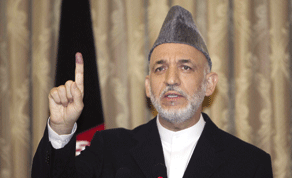
“All issues related to the parliamentary election are considered ended,” Karzai spokesman Siamak Hirawi said.
“The recent ruling of the IEC is enforceable and implementable.”
The IEC was assigned by Karzai to make the final ruling in the nearly year-long row. In June, a special election tribunal backed by Karzai ruled that 62 lawmakers, a quarter of the lower house of parliament, should be expelled.
The IEC’s final ruling fell well short of that figure.
On Tuesday, up to 700 Afghans marched through Kabul to protest against the decision, chanting anti-UN slogans and accusing the UN Assistance Mission in Afghanistan (UNAMA) of interfering in the process.
Earlier Karzai met children who had been rescued by authorities before carrying out suicide bombings they had been groomed to do by the Taliban, the president’s office said in a statement.
Karzai ordered the younger children sent back to their parents immediately and said the older ones would be returned to their homes after education and reintegration programmes.
“There is no bigger crime than to fasten explosives to a child and tell him to go and commit suicide, you will be saved and shrapnel will kill others,” a statement quoted Karzai as saying.
The statement added: “By their lies they try to kill children of this nation.”
Defence Minister Abdul Rahim Wardak last week said there was an increase in suicide bomb attacks across the country in recent months.
Explaining the increase, Wardak said: “Suicide bombers are more suitable, they are more easy because they don’t need many resources, or that much expenditure. But they do need a lot of crafty planning, there is no doubt about it.”