Reuters/Karachi
Fresh political and ethnic violence gripped Pakistan’s commercial capital over the past three days, leaving up to 44 people dead and taking the death toll for July to about 185, city police said yesterday.

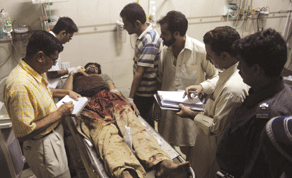
Pakistani paramedics treat an injured man caught in the recent surge of violence, at a hospital in Karachi late on Sunday
Most of the weekend’s casualties were reported in the city’s eastern Malir, Landhi and adjoining areas — a multi-ethnic, lower middle class neighbourhood.
“We have identified the people and at least 200 police commandos will be dispatched to search and arrest these people,” said Naeem Boroka, a senior police official in Karachi’s eastern area.
Police said there was no clear reason for the latest bout of fighting. The city, home to more than 18mn people, has a long history of ethnic, religious and sectarian violence.
The areas affected are home to both Pashtuns and Muhajirs, the descendents of Urdu-speaking refugees who fled India to settle in Karachi in 1947 following the sub-continent’s partition.
The two political parties representing the two ethnic groups have a history of enmity and violence between them.
But the recent fighting also included Sunni-Shia violence, with personal feuds played out in an environment that has seen a breakdown in law and order, said Sindh Information Minister, Sharjeel Memon.
The Muhajir-backed Muttahida Qaumi Movement, the Pashtun-backed Awami National Party and the Pakistan People’s Party have often used street thugs and ethnic gangs over the years as footsoldiers in a city-wide turf war over political power in Karachi.