


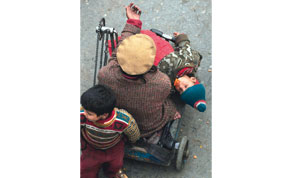
A woman holds her child on a three-. wheeler cart as she begs along a street in
Pakistan’s crippling inflation rate has left trader Mohamed Farouk with a painful task at the end of each day — throwing out a large quantity of his fruits and vegetables because it’s too expensive to sell.

Soaring prices also mean he often has to purchase stocks on credit from wholesalers.
“We can’t make money anymore because prices have been high for so long,” said Farouk, sitting beside other idle merchants, warming their hands over a fire burning in a large can.
“We are losing big profits. I wish the government would help. They are just stuffing their pockets with the country’s money.”
Pakistan’s central bank increased its key policy rate to 14% in November, its third consecutive hike in six months because of persistent inflation due primarily to government borrowing from the State Bank of Pakistan.
Other factors fuelling prices include the damage caused by the summer floods, estimated at around $10bn, to crops and related industries.
At the same time, wages have not kept pace with prices rises, making it harder for ordinary Pakistanis to survive. According to some statistics, more than 60% of the population lives on less than $2 a day.
It’s not just ordinary Pakistanis who are frustrated.
Inflation stood at single digits for many years. But Pakistanis have been hit with an average inflation rate of 15% over the past three fiscal years.
Economists say reckless government policies are likely to keep it high.
Cash-strapped
Uncontrollable forces, like a spike in global commodities prices, add to inflationary pressures.
The Pakistan People’s Party (PPP)-led government doesn’t have the political courage to take measures such as imposing a new sales tax demanded by the IMF to ease the fiscal deficit, analysts and economists say, making it impossible to tame inflation.
The administration set a dangerous precedent this month.
To lure back an estranged ruling coalition partner and appease opposition parties, it reversed a fuel price hike, angering ally Washington, which says
The decision will force the government to fund subsidies by again borrowing from the central bank. That will fuel inflation and further expose the government to criticism from its political enemies, who sense an opportunity for scoring points but who have offered no alternatives.
“The opposition and some of the PPP’s coalition partners have now woken up to the reality that economic issues are very popular populist issues in
Opposition parties, and even some members of the ruling coalition, fiercely oppose IMF-recommended reforms, saying they will hurt ordinary Pakistanis.
But that will only prolong their suffering. Pakistanis have watched the price of tomatoes jump 30 . 21 % in December. Cooking oil was up 4.17% and eggs rose by 10% over the previous month , official figures show.
Mrs. Ashraf walked through an
The IMF — which is keeping Pakistan’s economy afloat with a $11bn loan that averted a balance of payments crisis in 2008 - says only bold reforms can really help Pakistanis, by strengthening the economy in the long run.
In
Current inflationary pressures in the agriculture sector can be traced back to a PPP decision in 2008 to sharply raise the price it pays to farmers for wheat to encourage them to grow more, critics say.
“The bottom line is inflation is here to stay for at least the next two years,” said Sakib Sherani a former senior economic adviser to the government. “High inflation.”
Taxi driver Annar Gul works 15-hours a day, earning about Rs300 ($3.50 a day). A kilo of tomatoes costs about Rs80.
“I am the sole bread-earner of the family of 12, including my old parents, and don’t know how long we can survive when food prices are increasing daily,” said Gul, a resident of