Business

Monday, February 09, 2026 | Daily Newspaper published by GPPC Doha, Qatar.

Business

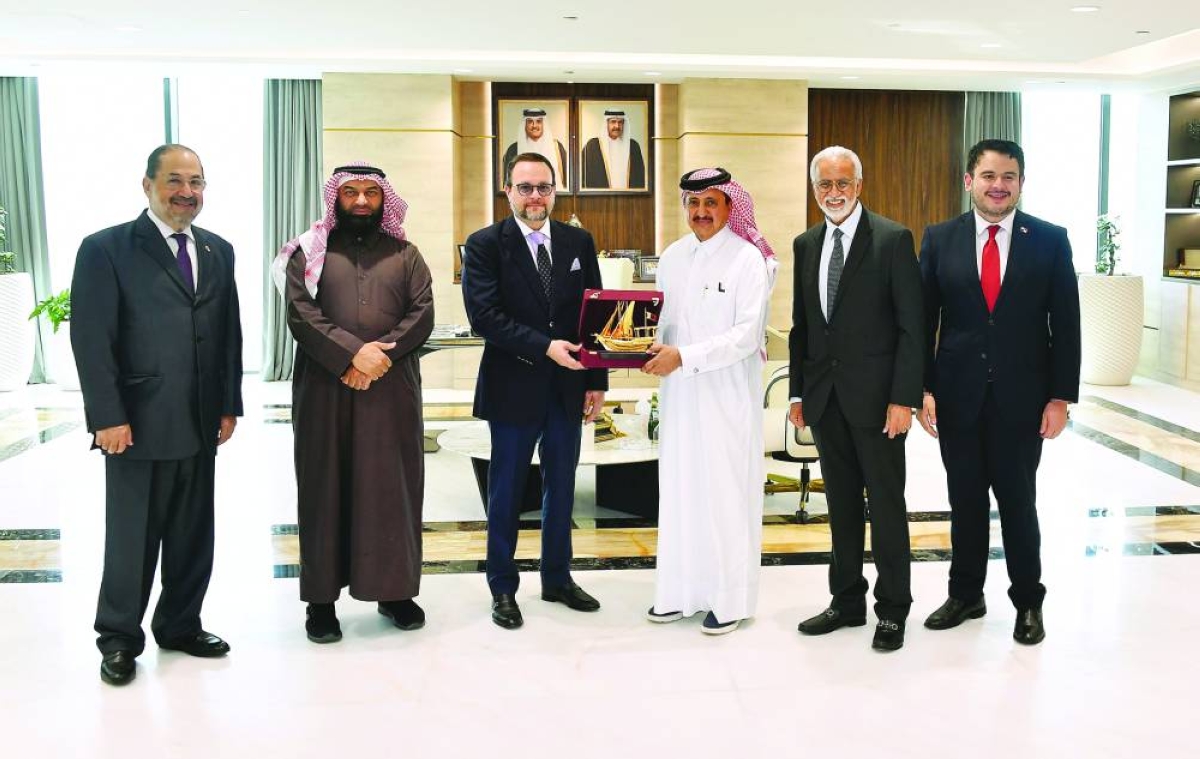
QSE and AlRayan Bank officials at the debut of Green sukuk on the bourse. PICTURE: Shaji Kayamkulam

QSE sees successful listing of Qatar's first green sukuk

The Qatar Stock Exchange (QSE) Monday saw the successful listing of Qatar’s first Green sukuk, issued by AlRayan Bank, in a further step towards deepening the capital markets.The Green sukuk issuance, which amounts to QR500mn with a three-year tenor and an annual profit rate of 4.25%, represents a national first for Qatar, supporting the continued development of the local capital-markets ecosystem and expanding access to sustainable, Shariah-compliant financing solutions for local and international investors.Signalling its advent, a bell-ringing ceremony was organised at the QSE where top officials of the bourse, including its chief executive officer Abdulla Mohammed al-Ansari, as well as AlRayan Bank executives including Fahad Bin Abdulla al-Khalifa, its chief executive officer, were present.This issuance is the first Green sukuk to be done via a Qatar Financial Centre-based entity, listed and cleared in Qatar, supporting the continued development of the local capital markets ecosystem and expanding the range of sustainable, Shariah-compliant instruments available to investors."The listing of the first Green sukuk in the history of QSE marks an important milestone in the continued development of Qatar’s capital market, as it reflects our commitment to expanding sustainable and Shariah-compliant financing instruments, while strengthening the depth and diversity of the debt market in line with global best practices," said al-Ansari.This achievement, according to him, reinforces the QSE’s role as a comprehensive platform capable of supporting innovative financing solutions that align with national development priorities and long-term sustainability objectives.This accomplishment also echoes the high level of coordination and integration across the key components of the national financial ecosystem, including the QSE, the Qatar Central Bank, the Qatar Financial Markets Authority, Edaa, and other relevant entities, working collectively in line with the objectives of the Third Financial Sector Strategy, he said."The listing further underscores the integration of ESG (environment, social and governance) principles within Qatar’s capital-market framework and enhances the market’s ability to meet the expectations of investors seeking opportunities that combine financial returns with positive environmental impact, while contributing to the advancement of sustainable economic growth," al-Ansari said.Terming that this debut Green sukuk as a "significant step" for AlRayan Bank; al-Khalifa said it reflected the bank's commitment to lead in ESG and sustainable finance through concrete actions that align responsible banking with market advancement."By delivering the first Green sukuk to be listed and cleared in Qatar, we are not only reinforcing our role as a forward-looking institution, but also contributing to the evolution of the local capital markets infrastructure. We will continue to build on this momentum with initiatives that support a more sustainable economy and strengthen long-term confidence in Shariah-compliant sustainable finance,” he added.Building on its ongoing commitment to responsible growth, AlRayan Bank views this issuance as a clear signal of its intention to play a leading role in shaping sustainable finance in Qatar, combining principled Islamic banking with the discipline and credibility required to scale ESG-aligned solutions and deliver long-term value.

Gulf Times

How Trump is testing India’s US-Russia balancing act

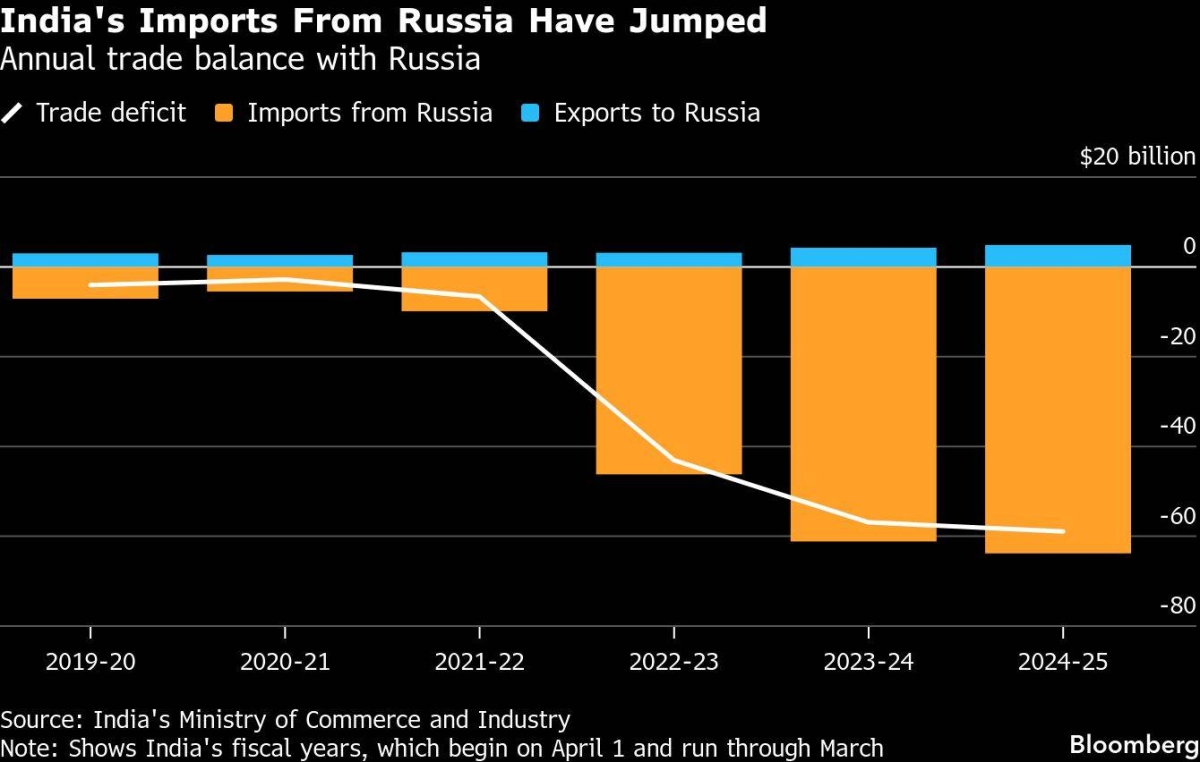
Prime Minister Narendra Modi has long had to balance ties with Russia and the US as India sticks to its policy of strategic autonomy. That task has been more challenging amid pressure from the Trump administration to stop buying Russian oil, which saw US tariffs on Indian goods ratchet up to 50%.After months of friction, President Donald Trump announced on February 2 that he will slash the US’s 25% “reciprocal” duty on products from India to 18%. The 25% “secondary” tariff designed to penalise India for importing Russian crude will also be lifted.Trump said on his Truth Social platform that in return, India has agreed to stop purchasing Russian oil, reduce its trade barriers for US goods to zero, and commit to buy more than $500bn of American products. These details of the trade deal have yet to be confirmed by Modi, although he did affirm the new lower tariff rate that will bring much-needed relief to India’s economy. How has India’s relationship with the US and Russia evolved?Since gaining independence from the British Empire in 1947, India has had a strong and stable relationship with Russia. India’s External Affairs Minister Subrahmanyam Jaishankar has referred to these ties as the one constant in global politics over the last half century.During the Cold War, India maintained cordial relations with the Soviet Union as the US moved closer to India’s arch-rival, Pakistan. Despite New Delhi’s avowed non-alignment with either of the era’s two superpowers, US backing of Pakistan in its 1971 civil war — that led to the independence of Bangladesh — drew India closer to Moscow.India’s ties with Russia strengthened over the following decades as the two countries collaborated in critical areas such as space, nuclear energy and defence. In recent years, Modi has endeavoured to preserve this long-standing relationship with Russia while also pursuing deeper links with the US, which India sees as a partner in standing up to a more assertive China.India has adopted a cautious position on the war in Ukraine. It’s called for a halt to the fighting but has been reluctant to criticise Russia’s invasion and abstained from UN votes condemning the war. When President Vladimir Putin visited India in December — his first trip to the country in almost four years — the two sides said that Russia-India ties “remain resilient to external pressure.” How much does India rely on the US for trade?The US is India’s biggest export market. The South Asian nation sent $86.5bn of goods to America in fiscal year 2024-25, equivalent to almost a fifth of its annual exports. Its imports from the US totalled $45.3bn.Trump’s 50% tariff was among the highest rates the US has applied to goods from a major trading partner. The duties soured ties between the two countries, squeezed labour-intensive industries in India — including textiles, leather, footwear and jewellery — and undermined the appeal of the South Asian country as a manufacturing and export hub.The reduced 18% levy helps restore India’s competitiveness with regional peers, coming in lower than Vietnam’s 20% rate and the 19% applied to most of Southeast Asia.The precise trade concessions India has agreed to in exchange for the lower tariffs are unclear. Trump says that the country will scrap both tariff and non-tariff barriers, and has committed to buy hundreds of billions of dollars of US goods spanning energy, technology, agriculture, coal and more.India is largely self-sufficient in many major crops. Following Trump’s announcement, Indian Commerce Minister Piyush Goyal told reporters that New Delhi had protected sensitive sectors such as agriculture and dairy in the trade deal. These industries underpin the livelihoods of many Indians. The country maintains strict restrictions on genetically modified crops, which dominate US corn and soybean production. How big is India’s trade relationship with Russia?India and Russia have been among each other’s top five trading partners since 2022, when India stepped up its purchases of Russian oil. Overall bilateral trade reached a record high of $68.7bn in FY2024-25, and the two countries are aiming for this to expand to $100bn by 2030.India’s exports to Russia totalled $4.9bn in the year to March 31, 2025, and included pharmaceuticals and agricultural products such as rice and tea. This paled in comparison to its imports from Russia, which amounted to $63.8bn and were primarily oil and petroleum products. How much oil does India buy from Russia?India, the world’s third-largest consumer of oil, used to source a negligible amount of crude from Russia. But as Western sanctions forced Russian oil exporters to offer deep discounts to replace the loss of European customers, Russia became India’s top supplier. At its peak, the Asian nation was taking more than 2mn barrels a day of Russian crude.The Trump administration sought to apply pressure on India to stop buying oil from Russia, accusing it of helping to fund Putin’s war effort in Ukraine. The US introduced a 25% “secondary tariff” on imports of Indian goods from late August, which has now been lifted.While India’s purchases of Russian crude have slowed, they haven’t halted entirely. Daily flows were still around 1.2mn barrels in January, according to data from Kpler. Top executives from India’s state and private refiners previously said that they expect these volumes to drop below 1mn barrels a day — a level that was seen as achievable for India and acceptable to the US.The Kremlin said on February 3 that it hadn’t heard any statements from India about plans to stop purchasing oil from Russia, according to Russian news agency Interfax.Indian refiners have been pivoting toward suppliers in the Middle East, including Saudi Arabia and Iraq, whose medium and heavy crude grades are similar to Russia’s Urals export blend. Trump said in his February 2 social media post that India will buy “much more” oil from the US and potentially increase shipments from Venezuela, too. The US is aiming to revive Venezuela’s beleaguered oil industry, having removed the Latin American country’s longtime leader, Nicolas Maduro, in January.Ratings agency ICRA estimates that switching to alternatives to Russian crude will increase India’s import bill by less than 2%. ICRA expects India to source more Venezuelan oil, which is currently cheaper than international benchmarks. How much does India depend on Russia for weapons?Russia has for decades been India’s largest supplier of weapons. The Indian military has more than 200 Russian-made fighter jets, as well as several S-400 surface-to-air missile defence systems that were used during the four-day conflict with Pakistan in May 2025.In recent years, India has increased arms purchases from the US, Israel and France, according to the Stockholm International Peace Research Institute, an independent think tank that studies global weapon sales. A report from the US Congressional Research Service said that defence trade has become “a major pillar of the US-India security partnership” since 2008. India has contracted at least $24bn worth of American military hardware, including attack helicopters, anti-ship missiles and howitzer cannons.Nonetheless, Indian Defense Secretary Rajesh Kumar Singh said last year that India had no intention of ending its long-standing defence co-operation with Russia, and that it would continue to buy military equipment from both Russia and the US. In December, India finalised a $2bn deal to lease a Russian nuclear-powered submarine. The contract was originally signed in 2019 but delivery was delayed.