Search - World Summit for Social Development

Thursday, October 15, 2026 | Daily Newspaper published by GPPC Doha, Qatar.
Search Results for "World Summit for Social Development" (360 articles)

All words
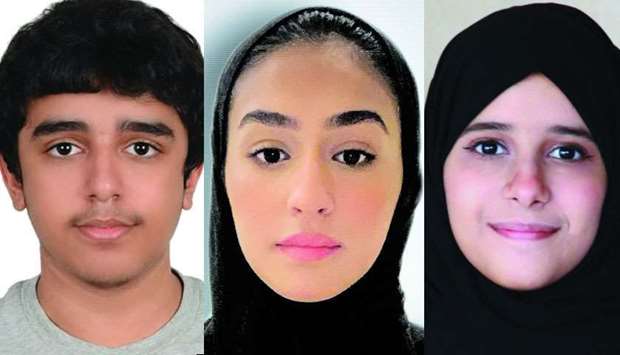
Khalid al-Nabti, Noora al-Muftah, Sara Sultan Almaadeed
Qatar

QF students to speak up on climate change at summit

For Qatari student Sara Sultan Almaadeed, the need to talk about the consequences of climate change is beyond urgent. “I can’t turn around and pretend I am saving the world by using my car fewer times than usual when fires rage on in different parts of the world,” she says. While she knows that doing something instantaneously tangible about the climate crisis does not fall entirely into the hands of the youth, she says: “We have a unique capacity to transform the disaster that is our environment through our speech, through our informed perspectives, and through youth culture.” Like Almaadeed, 400 other young people from all over the world are set to attend Youth4Climate: Driving Ambition, in Milan, Italy, which will also see Qatar Foundation (QF) and its entities participate from September 28 to October 2. The event, hosted by the Government of Italy as part of Pre-COP26, is considered “historic” as this will be the first time that young people will bring forward their proposals and engage in discussions with government representatives attending the event. The results of these discussions will then be taken to the 26th Conference of the Parties (COP26) of the United Nations Framework Convention on Climate Change (UNFCCC), to be held in Glasgow, UK, in November 2021, and will also be shared in other United Nations meetings concerning sustainable development. “We have a unique opportunity to express empathy not just for the people or animals suffering, but for our world as a whole; nothing around us deserves to die due to carelessness,” says Almaadeed, who is participating in Youth4Climate through Qatar Debate, a QF member. “Opportunities like Youth4Climate illustrate how our thoughts have the potential to be transformed into real policies – into real change – only if we let them.” QF’s participation in Youth4Climate will be through its initiative Doha Debates, which, among other activities, will host an edition of its #DearWorldLive series; THIMUN Qatar, which comes under QF’s Pre-University Education (PUE) and will participate in two panels, led by youth and educators, on their roles in climate action; Qatar Debate, which will engage in a presidential-style debate on future eco-leaders; and a Qatar Foundation International discussion that will delve into partnerships that guide students through the process of exploring sustainability in their local community resulting in global impacts. “As youth, it is vital that we participate in events that aim to solve a plethora of issues regarding the climate, as we represent the future leaders who will inevitably inherit the fight for our planet, and gain responsibility for it,” says Noora al-Muftah, a Grade 10 student of Qatar Academy Doha (QAD) – a school under QF’s PUE – and a Youth4Climate panelist, as well as a QAD Model United Nations (MUN) vice-president for 2021-22. “Events like Youth4Climate give youth a voice and restore our generations’ faith and part in climate action.” As Qatar transitions from a nation dependent on hydrocarbons to one that is built on sustainability in all aspects – economic, human, social and environmental – it becomes imperative to educate and transfer knowledge to the younger generation of this renewed journey of development and growth. “The work we’ll be doing is promoting awareness in Qatar about the potential of renewable energy usage in Qatar,” says Khalid al-Nabti, another Grade 10 student at QAD, as well as a Youth4Climate panelist and QAD MUN treasurer for 2021-22. “This is vital for sustaining the economic growth of Qatar, and stopping the effects of climate change. One of the ways we can do this is by teaching the youth of Qatar about the potential of wind energy and solar energy in Qatar.” At Youth4Climate, four major themes will be at the centre of the discussion: youth driving ambition; sustainable recovery; non-state actors’ engagement; and climate-conscious society. The Pre-COP26 meeting will be attended by 35-40 countries, representatives of the UNFCCC Secretariat, the chairs of the Subsidiary Bodies of the Convention, and stakeholders who play a key role in the fight against climate change and the transition to sustainable development.

Dr Asmaa al-Fadala
Qatar

Education leaders must adapt to changing system

Education leaders need to adapt to the rapid transformations happening in the systems and schools, a World Innovation Summit for Education (WISE) official has exhorted. “There is a general consensus now, particularly in the wake of Covid-19, about what 21st century learning looks like, but we also must apply that same criteria to our educators and school leaders,” said Dr Asmaa al-Fadala, director of Research and Content Development at WISE, a Qatar Foundation initiative, while speaking about the 2020 report by the Economist Intelligence Unit (EIU) and sponsored by QF on the future of higher education. The EIU report, titled ‘New schools of thought: Innovative models for delivering higher education’, highlights perspectives on future of learning as well as the needs of students and societies in a post-Covid-19 world. With the Covid-19 pandemic forcing universities to embrace online learning and disrupting traditional ways of delivering education, the report analyses how certain innovative higher education models are addressing social, political and economic challenges, highlighting how institutions must rethink the education and adapt to the demands of a rapidly changing world. Dr al-Fadala said if 21st century learning embodies an approach to education that embraces academic skill with behavioural competencies - such as collaboration, problem-solving, creativity and life-long learning – so that the learners can survive and thrive in this uncertain world, the same skills and competencies are required for the educators and school leaders to support, propel and influence this learning. “Shouldn’t we be shifting our approach to school leader development from one that centres on management to one that prioritises many of the same skills and competencies that we have recognised as necessary in our future-ready learners?” she asked, highlighting that it will necessitate a paradigm shift from ‘school leader as manager’ to school leader as agile, collaborative, technologically savvy, problem solver who supports and nurtures future-prepared systems of learning. According to the official, the Covid-19 crisis has demonstrated that a university education is now more essential than ever. “On an economic level, resilience of individuals has been highly dependent on having the knowledge and skillsets that come with advanced degrees, especially in the fields of education, technology, industry and medicine. Meanwhile, workers in other, more traditional industries have been more negatively affected, especially those whose jobs don’t afford the flexibility to work remotely. So, this crisis demonstrates the need to build expertise in those highly skilled sectors that we are finding in demand, especially given the likelihood that global issues like Covid-19 may become more common,” she explained. “What this crisis has really laid bare is that our children will enter an unprecedented world of uncertainty. Schools of the past will not prepare them for the future they will inherit and right now it is hard to even predict what that future may look like, including what career opportunities there will be. Over and over again, I keep hearing that the jobs of tomorrow may not even exist today,” added al-Fadala.

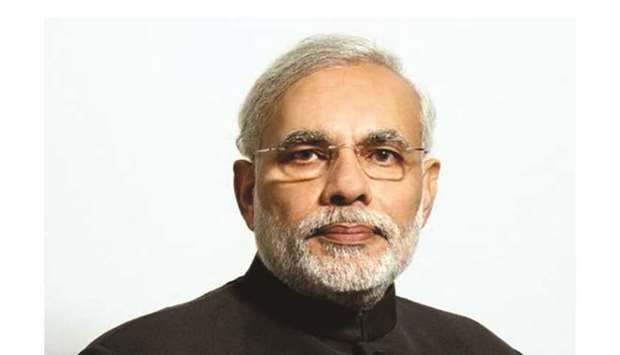
Indian Prime Minister Narendra Modi
International

New India to be a catalyst for global growth: PM

Prime Minister Narendra Modi yesterday said India was going through major social and economic changes and the resultant New India will prove to be a catalyst for global growth. “India is witnessing rapid economic and social changes. The country is going through a big transformation. We are marching towards a New India,” Modi said at Uttarakhand’s maiden Investors Summit being held in Dehradun. “Every major institution in the world is predicting that in the coming decades, India is going to be the driving engine of world growth,” he said, adding that the country was witnessing the “best conducive environment” for business and investment. Modi said India’s economy had stabilised over the last few years, fiscal deficit had come down, inflation was under control and the middle class was rising. “The scale and speed at which reforms are happening are unprecedented. In the last two years, the central and state governments have ushered in more than 10,000 reforms. Thanks to this, India has made a significant jump of 42 points in the global ‘ease of doing business index,” the prime minister said. “As part of these reforms, more than 1,400 laws have been repealed. Major tax reforms have been brought in. The Insolvency and Bankruptcy Code (IBC) has made doing business easier and strengthened the banking system.” Modi said the Goods and Services Tax (GST) had been the “biggest tax reform since independence” that had made the entire country a single market and widened the tax base. He said infrastructure development was taking place at a “record speed” with more than 10,000km of national highways built in just the last one year. “It means over 27km road built per day. This rate is double compared to road development during previous governments.” Modi said the government had launched modernisation of 400 railway stations, was building 100 new airports and helipads and was working on setting up 100 waterways. He also listed down schemes like ‘housing for all’, ‘health for all’ and ‘banking for all’ among others. Inviting investors to participate in the world’s largest healthcare scheme, Modi said the ‘Ayushman Bharat’ had opened up huge opportunities in the health sector, mainly in the tier-2 and tier-3 cities, in terms of hospitals, doctors, paramedics and medicines. “The scheme gives coverage to a population more than America, Canada and Mexico combined. This population is more than that of entire Europe. And for this market, the payment is ready. This offers the biggest opportunity in the country.” Turning his focus to Uttarakhand, the prime minister said the young state was a shining example of what the New India represents and there was great potential to be tapped. “Today, Uttarakhand is moving fast on the economic development path,” he said and expressed his hope that the agreements signed during the two-day event soon comes on the ground so that the people get jobs and other benefits. Modi recalled how as chief minister of Gujarat he said he wanted to emulate South Korea when people expected him to mention America or the UK. He said there were a lot of similarities between Gujarat and South Korea. “Our states have more potential than many countries and each state can work towards it based on its competence,” he said. “Today, fortunately there is a healthy competition among the states and no state would lag behind if they work on their respective strengths.” Modi said Uttarakhand nestled among the Himalayas and was blessed with the Ganges. It also had a special SEZ which was different from the usual Special Economic Zone. “It is Spiritual Eco-Zone which is many times more powerful than the typical SEZ.”

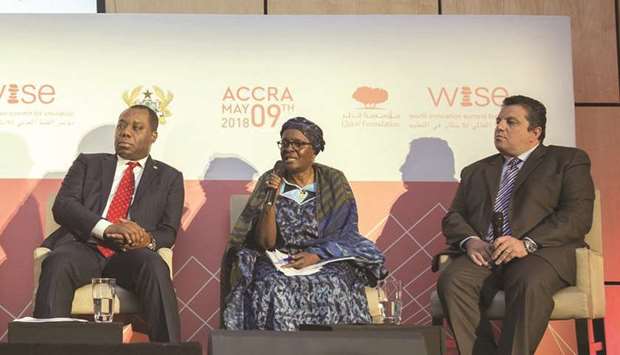
WISE engaged education stakeholders from across Africa during its WISE@Accra forum.
Qatar

WISE forum in Accra stresses crucial role of education

The World Innovation Summit for Education (WISE), in partnership with the office of the President of Ghana Nana Addo Dankwa Akufo-Addo, recently held WISE@Accra, a forum to engage education stakeholders from across Africa.  The one-day forum, which took place in Ghana’s capital, Accra, was held under the theme ‘Unlocking the World’s Potential: Leading and Innovating for Quality Education in Africa’.  The event explored a number of topics, including quality education, ethical leadership, teacher training, teaching 21st century skills, funding, partnership accountability and regional collaboration to tackle development challenges. WISE is an initiative of Qatar Foundation. Stavros Yiannouka, CEO of WISE, said: “With almost half of the world’s youth living in Africa, the international community stands to benefit from empowering the leaders and change-makers of tomorrow.”   The forum also served to highlight the engagement of WISE with African policy-makers, thought leaders, business leaders, entrepreneurs and educators.  During the WISE 2017 summit, President Akufo-Addo underscored  the importance of education to achieve prosperity, saying: “Education creates social mobility and it’s the hope of every parent that their children may have access to education to alleviate them from poverty and offer an opportunity of an improved quality of life.”  Dr Patrick Awuah, founder and president of Ashesi University and the 2017 WISE Prize Laureate, re-imagined the future of higher education during his keynote address: “The work that we do as educators is to make the world a more hopeful place for generations to come.”  Ashesi University is empowering Ghanaian youth by equipping them with entrepreneurship, ethics and leadership skills to build the future of the continent. By showcasing education enterprises and projects from its global programmes – the WISE Prize, Awards and the WISE Accelerator – WISE@Accra demonstrated the positive role innovation plays in enhancing access to education and improving learning outcomes, a press statement noted. Participating projects from the WISE Accelerator initiative were present at the forum, including Kepler, Make Ghanaian Girls Great and Green Shoots, a South African initiative that improves the quality of mathematics education through ICT.  The director of Green Shoots, Jo Besford, said: “The urgency to deliver quality education for all is driving an ‘innovation explosion’ in Africa.”  The mentorship, network and visibility provided by the WISE Accelerator has had a significant impact on GreenShoots, recently featured by the Blended Learning Universe, an initiative of the Clayton Christensen Institute. 

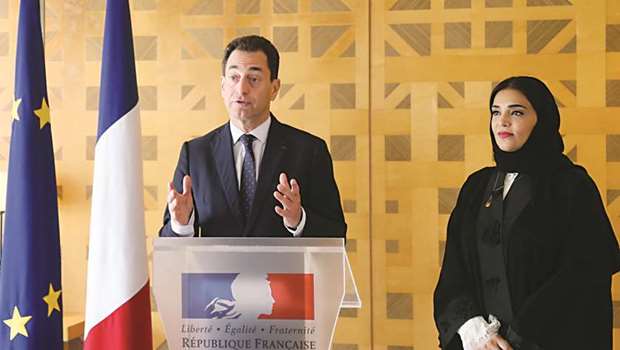
French ambassador Eric Chevalier reveals more about the forum to be held in Paris as Dr Amal al-Malki looks on. PICTURE: Jayan Orma
Qatar

Academic chosen for Paris ‘gender equality’ summit

Qatari academic and dean of the College of Humanities and Social Sciences at the Hamad bin Khalifa University (HBKU), Dr Amal al-Malki, has been chosen by the French Ministry for Europe and Foreign Affairs to attend a high-level forum to held in Paris on ‘Gender equality’, between April 9 and 13. Informing this yesterday French ambassador Eric Chevalier said the programme aims at providing participants with “genuine knowledge on gender equality issues and policies in France as well as highlighting the activities of women and their contribution to gender equality in their respective countries”. “The invitation and new distinction now acknowledges Dr al-Malki’s unwavering long lasting commitment to women’s rights and professional equality. The establishment of the Master of Arts in Women, Society and Development at HBKU by Dr al-Malki is another concrete illustration of her engagement in favour of this crucial issue.” The envoy said the French ministry has invited from Middle East and North Africa 11 Arab women who have been active in campaigns for gender equality as “the issue (gender equality) is one of the nation’s key focuses as stressed by French President Emmanuel Macron during his speech before the UN General Assembly last September.” The ambassador recalled that President Macron had launched the 3rd International Strategy for Women and Men Equality 2018-2022 on March 8 to coincide with the International Day for Women. “It aims to co-ordinate actions designed to improve the situation of women around the world,” he said while adding the event is being organised under the framework of “Future Leader Invitation Programme” Chevalier added the strategy consisted of such domains of action as political issues of gender equality, better financing of campaigns for gender equality, improvement of their visibility and role of the civil society. Dr al-Malki said she was blessed and fortunate to have a strong leader like “Her Highness Sheikha Moza bint Nasser who has single-handedly changed society’s perceptions on women, especially those working, giving us legitimacy and respect.” She highlighted that Qatar leads with regards to women’s rights as part of its overall social justice and equality agenda. “Therefore as a Qatari academic, I feel it is my duty to participate in an important dialogue about women equality and empowerment, and engage with government as well as the local and global communities.” Dr al-Malki described herself as a moderate, who stands for a just world and she was fortunate to be part of the society in Qatar, where women contribute for an impressive 36.7% share to the national economy. “The Arab society is a rich and diverse group, spread over many regions and I will use the opportunity to highlight this,” she added.

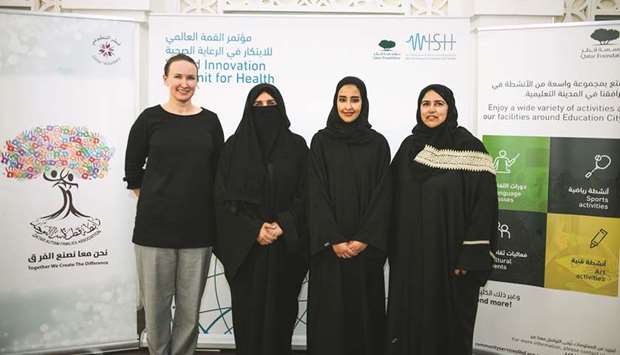
QF, QAFA and WISH officials pose for a photo after signing the MoU.
Qatar

QF signs agreement to promote autism plan

Qatar Foundation for Education, Science and Community Development (QF), the World Innovation Summit for Health (WISH) and Qatar Autism Families Association (QAFA) have signed a Memorandum of Understanding (MoU) advancing the Qatar National Autism Plan. The MoU intends to provide socially inclusive opportunities for those with autism and their families at QF facilities, particularly sports and leisure activities. The agreement was signed by Machaille al-Naimi, president, Community Development, QF, and Fatima al-Sulaiti, chair, QAFA. Also present was Sultana Afdhal, acting CEO of WISH. “We have been working with QAFA for some time now, particularly over the summer months when we hosted a number of hugely popular activities initiated by WISH,” al-Naimi said. “The signing of this MoU is the culmination of that work and provides the framework for these and other events to continue on a year-round basis, providing much needed opportunities for inclusive sports and leisure participation.” WISH, in partnership with Qatar Foundation’s Community Development, introduced a number of activities, primarily for QAFA, during 2017 to address the growing need for social and sports facilities to be made available to children with autism. These included swimming classes, horse riding lessons, and special football sessions with coaches from the Liverpool Football Club Foundation.  Beyond sports and leisure activities, the agreement also provides an opportunity for WISH and QAFA to collaborate towards the advancement of autism spectrum disorder research in Qatar.  “We are keen to collaborate in a number of important areas beyond the sports and leisure initiatives that have already been initiated, including lectures and workshops, research awareness through community outreach events, and conducting studies to capture families’ experiences with national healthcare services,” Afdhal said. “We are delighted and grateful that Qatar Foundation is opening up its recreation facilities for our families so that children, as well adults, with autism and other complex needs, can enjoy the health benefits of sports activities all year round. The summer activities organised by WISH were a great way to integrate children with autism into activities that they are often marginalised from, in a free and interactive learning environment,” al-Sulaiti noted.

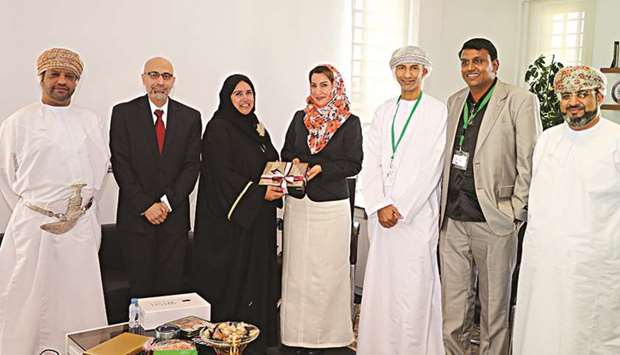
WISH senior management with Dr Mona Fahad al-Said. (centre)
Qatar

WISH presents research findings on dementia, autism

The World Innovation Summit for Health (WISH), an initiative of Qatar Foundation, has presented its findings from research into dementia and autism at the fifth International Workshop on Food and Brain Health, at Sultan Qaboos University (SQU) in Muscat, Oman. The two-day event held under the patronage of Dr Mona Fahad al-Said, assistant vice chancellor for international co-operation at SQU, from November 5-6, brought together delegates from around the world to investigate the impact of food and nutrition on brain health. Discussions covered topics from the definition, causes, and treatment for neurodegenerative diseases to research findings on dietary practices and their unique role in health. Sultana Afdhal, acting chief executive officer, WISH, and Dr Walid Qoronfleh, director of research and policy development, WISH, met with Dr al-Said to outline WISH’s work and discuss areas of potential future collaboration between WISH and SQU. Afdhal said, “I’m pleased to have had the opportunity to accompany the WISH research team to SQU, where we were given the chance to join the discussion on food and brain health and to share our research on autism and dementia, two very important mental health-related topics. Further studies within both can bring great benefit to the population of Qatar, the region, and beyond.” Dr Qoronfleh delivered a keynote address on dementia on the first day of the workshop, organised by SQU’s Food Science and Nutrition Department. Dr Qoronfleh highighted the main learnings accumulated from the two research reports produced by WISH to date, namely a 2015 dementia forum report titled ‘A Call to Action: The Global Response to Dementia through Policy Innovation’ and a 2016 meeting report titled ‘Enhancing the Response to the Burden and Impact of Dementia Through Policy and Social Innovation in the Eastern Mediterranean Region’. A presentation about WISH’s autism research findings were delivered on the second day by three members of WISH’s Qatar-based research team, Sanaa Taha Alharahsheh, senior associate of research and policy, and research and policy development officers Faras K Almeer and Maha El Akoum. Their presentation was based on the WISH 2016 report titled ‘Autism: A Global Framework for Action’.

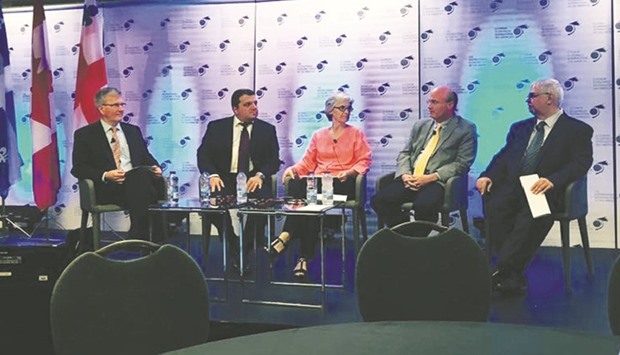
Alan Shepard, Stavros Yiannouka, Cecilia Du2019Oliveira, Mike Feerick, and Robert Beauchemin at the International Economic Forum of the Americas in Montreal, Canada.
Qatar

WISE attends international economic forum in Montreal

The World Innovation Summit for Education (WISE), an initiative of Qatar Foundation for Education, Science and Community Development, recently took part in the International Economic Forum of the Americas (IEFA) in Montreal, Canada. The three-day gathering brought together 4,000 international leaders under the theme ‘Shaping a New Era of Prosperity’. More than 200 speakers presented insights on major global economic issues, discussing their social, cultural, and political impacts.   In a roundtable discussion on technology and innovation in education, Stavros N Yiannouka, CEO, WISE, noted the dramatic potential of emerging technologies in extending education access to the most vulnerable and marginalised. Technology, he said, could only reach its full potential through strong teaching and leaders committed to transforming school systems. Yiannouka praised the economic and leadership opportunities that creative projects and organisations are bringing to women and young people in vulnerable regions, and called for a wider recognition of the need for creativity and innovation in education management. Also taking part were representatives of two WISE Award winning projects: Cecilia D’Oliveira, associate dean of Digital Learning, Massachusetts Institute of Technology, who led a team that developed the MIT OpenCourseWare, which shares freely teaching course materials that reach over 150mn people worldwide; and Mike Feerick, founder of the Alison courses, providing an online learning platform that enables worldwide users to gain employability skills. Also participating were Robert Beauchemin, CEO of KnowledgeOne, which provides training and development solutions for businesses; and Alan Shepard, president and vice-chancellor, Concordia University, Montreal. In a separate gathering at IEFA, Yiannouka called for a renewed commitment among global leaders to empowerment through education at all levels. “Education is likely the most effective investment societies can make to tear down the walls of ignorance, fear, and demagoguery wherever they may arise,” he said.

IN BRIEF
Qatar

WISE laureates speak on girls’ education

The World Innovation Summit for Education (WISE) recently hosted an informal round table with four WISE Prize for Education Laureates at the Skoll World Forum in Oxford. The discussion focused on girls’ education and included the participation of Dr Sakena Yacoobi, founder and executive director of the Afghan Institute of Learning; Ann Cotton, founder of Camfed; Vicky Colbert, founder and director of Escuela Nueva Foundation; and Dr Madhav Chavan, president of Pratham Education Foundation. During the round table, the laureates stressed the vital importance of girls’ education while engaging in discussions with those present at the session, including Sally Osberg, CEO of the Skoll Foundation, and Safeena Husain, founder and executive director of Educate Girls. WISE is an initiative of Qatar Foundation for Education, Science and Community Development. Established in 2011, the WISE Prize for Education recognises individuals and teams for outstanding, life-long achievements in of the field of education. The prize aims to elevate the status of education on the global agenda, and raise awareness of the key role education plays in the empowerment and economic security of communities and nations. The Skoll World Forum supports entrepreneurial approaches and solutions to some of the world’s most pressing challenges by bringing together social entrepreneurs with partners in a collaborative pursuit of learning and large-scale social change. The WISE session brought the dedicated work of the Laureates to the attention of a broader audience comprising high-level international stakeholders in the UK.

Precision Medicine
Qatar

WISH conference to discuss ‘Precision Medicine’

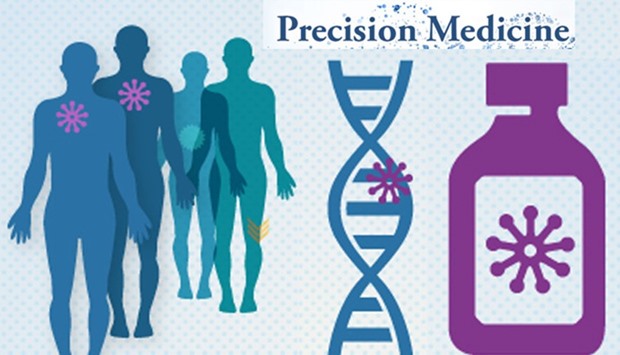
The World Innovation Summit for Health (WISH), a global initiative of Qatar Foundation for Education, Science and Community Development recently announced that a ‘Precision Medicine’ forum will be presented during its 2016 conference in November. Precision medicine (PM) tailors healthcare to account for variables in each patient’s genes, environment, lifestyle, and other factors. It represents the cutting-edge of treatment and policy, in contrast to the one-size-fits-all approaches of the past. Prof Victor Dzau, president of the Institute of Medicine of the National Academy of Sciences will chair the forum. ‘The field of precision medicine is rapidly advancing and will have a major impact on the practice of medicine. However, scientific and technological progress does not guarantee that the benefits of PM will reach the general public. Furthermore, there is concern that PM will only increase complexity, drive up costs, and increase inequity,’ Dzau said. ‘In order to maximise the impact of PM, every PM innovation must provide evidence it will lower costs and improve outcomes and is better than the current standard of care. This requires health outcomes and economic analysis both short and long term. Regulatory and payment frameworks should be developed to evaluate and incentivise cost-effective PM innovations.’ The WISH report will recommend how PM can be implemented based on the expertise of those at the forefront of its practice and development. The crucial measurable results for PM - patient outcomes and lowered costs - will be discussed, as well as how those can be incentivised within healthcare systems. The report will address the benefits of cross-referencing relevant data. Properly analysing the full breadth of information gathered by health systems has produced unexpected advances in both practice and policy. Guided by the principles of PM, developing the collection and analysis of such data could reveal even better methods to improve healthcare. In addition, the report will delve into the ever-present legal, ethical, and social concerns surrounding data collection, and will suggest how PM can be supported and funded at the system level, leveraging public-private partnerships to create sustainable, effective change. Egbert Schillings, CEO of WISH, said: ‘Traditional medical care has leveraged a one-size-fits-all approach to delivering health. However, with personal genome sequencing costing less than $1,000 and continuous advancements in technology, precision medicine is becoming a primary area of innovation. The WISH Precision Medicine forum report draws upon some of the best minds in modern healthcare to show how health systems can help deliver on that promise faster for the benefit of their populations.’

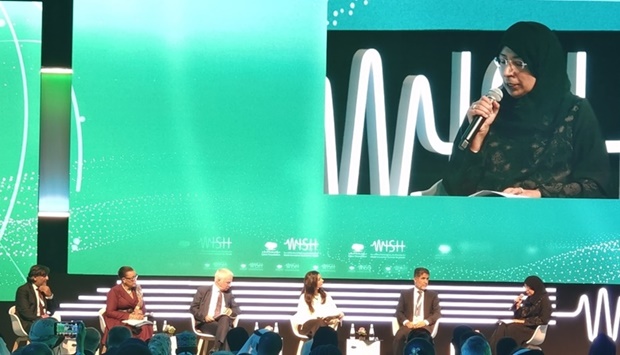
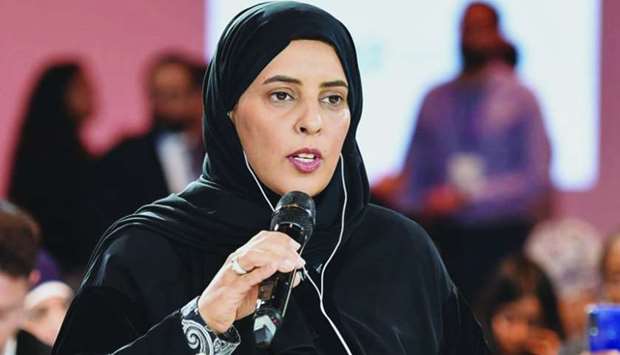
HE Dr Hanan Mohamed al-Kuwari addressing the panel discussion.
Qatar

Health minister highlights Qatar's resilience during Covid-19

The Minister of Public Health HE Dr Hanan Mohamed al-Kuwari highlighted Qatar’s efforts as well as the measures adopted by the country in overcoming the challenges posed by Covid-19, at the opening day of World Innovation Summit for Health (WISH) 2022. “When the health systems are overwhelmed, the whole world suffers as we have seen during the pandemic. Therefore investing in health systems and building the resilience is not a cost but an assurance,” stressed the minister during a panel discussion at the opening ceremony. According to Dr al-Kuwari, the pandemic was not just a challenge but also an opportunity to test the resilience of the healthcare system and be better positioned and prepared for any pandemic in future. She remarked that Qatar has dealt with Covid-19 pandemic with flexibility and excellently executed its plans, managed to build an information system that is capable of overcoming the emergency cases, provided the essential quarantine spaces and medical families, in addition to building the capacities of the medical practitioners to ensure their physical and psychological integrity. She explained: “Qatar did remarkably well to meet the challenges of the pandemic as our economy remained active, children attended school through online resources and despite high number of transmission of the virus, we had one of the least mortality rates in the world itself.” The minister said that Qatar has several lessons to share with the world. She explained: “We had focused on infrastructure by building a number of healthcare facilities that contributed to our resilience. This helped to face the pandemic and the associated challenges by creating the capacity needed to face the pandemic. We also focused to work together and a resilient health system can’t win without collaboration.” “Everyone in Qatar had equal access to vaccination and other healthcare needs irrespective of social or economic background. Our strong primary healthcare system contributed greatly to the success of the vaccination distribution,” she highlighted. The health minister noted that the training and development of the workforce in the country meant that they were equipped to meet the challenges and helped in overcoming the pandemic effectively. “In Qatar we had benefitted from preparing public health emergencies and national emergencies and that plan has really paid off. The role of healthcare workers was very much instrumental in overcoming the challenges,” added, Dr al-Kuwari.